

ACTOR · BORN 1926 · DIED 1991
Klaus Kinski
- Birth name
- Klaus Günter Karl Nakszynski
- Born
- October 18, 1926 · Zoppot, Free City of Danzig [now Sopot, Pomorskie, Poland]
- Age
- 65
- Died
- November 23, 1991 · Lagunitas, California, USA (died at 65 · heart attack)
- Height
- 1.73 m
- Occupation
- Actor, Writer, Additional Crew
- Spouse
- Minhoi Loanic (1971–1979), Brigitte Ruth Tocki (1960–1971), Gislinde Kühbeck (1952–1955)
- Children
- Pola Kinski, Nastassja Kinski, Nikolai Kinski
- Awards
- 4 wins, 8 nominations
- Known for
- Aguirre, the Wrath of God Aguirre, der Zorn Gottes (Don Lope de Aguirre), Fitzcarraldo (Brian Sweeney Fitzgerald - 'Fitzcarraldo'), Nosferatu the Vampyre Nosferatu: Phantom der Nacht (Graf Dracula (Nosferatu)), For a Few Dollars More Per qualche dollaro in più (Juan Wild - The Hunchback)
24 archived facts 4 topics 1 source Last reviewed Nov 2026
Klaus Kinski (18 October 1926 – 23 November 1991) was an actor best known for Per qualche dollaro in più, Aguirre, der Zorn Gottes and Il grande silenzio.
Klaus Kinski over the years


24 Interesting Facts About Klaus Kinski
Interesting Facts (17)
- #001
Klaus Kinski was diagnosed with antisocial personality disorder.
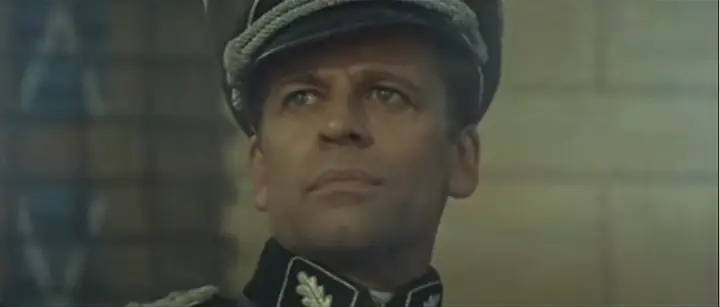
Klaus Kinski: in the streetImage: Wikimedia Commons · Gianfranco Parolini, Public domain - #002
Because no actor would work with him, Kinski performed in one-man productions on stage.
- #003
Kinski turned down the role of the German villain Toht in Raiders of the Lost Ark (1981), though he wanted to make a film with Steven Spielberg, because he thought "the script is as moronically shitty as so many other flicks of its ilk." He chose to appear in Venom (1981) instead because the salary was better.
- #004
For a short time Kinski lived in a flat in Munich (Elisabethstraße 3) that he shared with several people. One of the children living there was the thirteen-year-old Werner Herzog. They later collaborated on five films.
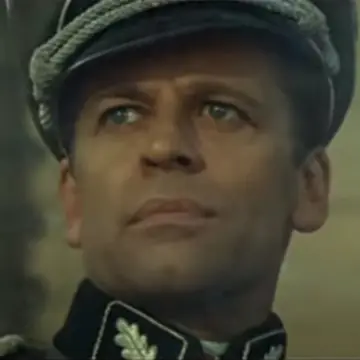
Klaus Kinski: a sceneImage: Wikimedia Commons · Gianfranco Parolini, Public domain - #005
According to Kinski, he turned down offers to work with the famous directors Pier Paolo Pasolini, Federico Fellini, Luchino Visconti, Ken Russell and Steven Spielberg because the salaries were too low.
- #006
He selected only films that had short shooting schedules and paid the most.
- #007
In 1977, his provocative appearance on the series Je später der Abend (1973) became legendary because he did not answer a single question during an interview and called the host, Reinhard Münchenhagen, "Herr Münchhausen."
- #008
Kinski appeared in two adaptations of Bram Stoker's 1897 novel "Dracula." He played Renfield in Count Dracula (1970) and Count Dracula in Nosferatu the Vampyre (1979).
- #009
Kinski worked with Christopher Lee on The Devil's Daffodil (1961), The Secret of the Red Orchid (1962), Circus of Fear (1966), Five Golden Dragons (1967) and Count Dracula (1970). His daughter Nastassja Kinski later worked with Lee on To the Devil a Daughter (1976).
- #010
As an actor, Kinski was entirely self-taught.
- #011
Kinski's autobiography was first published under the title "All I Need Is Love", but it was withdrawn in 1989 because of a contract dispute: a German publisher claimed that Kinski had previously published an autobiography titled "Ich, Kinski" for them, and sued the publishers. The book was reissued in 1997 under the title "Kinski Uncut", with material excluded from the first version added.
- #012
Kinski was ambidextrous, as seen in "Fitzcarraldo" (1982). He wrote with his right hand but ate and drew with his left.
- #013
Werner Herzog collaborated with Klaus Kinski on five feature films: Aguirre, The Wrath of God (1972), Nosferatu the Vampyre (1979), Woyzeck (1979), Fitzcarraldo (1982) and Cobra Verde (1987). Only director Alfred Vohrer worked with Kinski more often, directing 7 of the 16 'Edgar Wallace' films in which Kinski appeared.
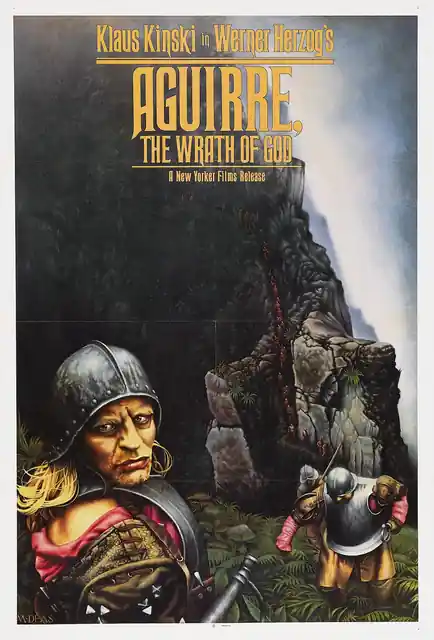
Klaus Kinski: Lope De Aguirre, behind the scenesImage: Wikimedia Commons · Poster design by Sawyer Studios. Poster illustration by Michael J. De…, Public domain - #014
Alfred Vohrer, the director with the strongest artistic influence on the popular German film series based on Edgar Wallace's material, worked with Kinski on 7 of the 14 'Edgar Wallace' films he directed: Dead Eyes of London (1961), The Door with Seven Locks (1962), The Inn on the River (1962), Der Zinker (1963), The Indian Scarf (1963), Again the Ringer (1965) and The Creature with the Blue Hand (1967).
- #015
Klaus Kinski was offered a role in Hammer's film, To the Devil a Daughter (1976), but turned it down because shooting his scenes would have taken more than ten days.
- #016
Klaus Kinski was announced to play Dr. Hans Fallada in Lifeforce (1985), but he withdrew from the film. He was also considered for Dr. Bukovsky.
- #017
Klaus Kinski was the brother-in-law of Tommy Kent.
Characters & Cast (1)
- #018
According to Tony Anthony, Klaus Kinski auditioned for the role of En Plein in The Stranger Returns (1967) but lost the part after a near-fatal accident at Cinecittà Studios. The horse he rode for the audition had not been ridden for months because it had been sheltered during the winter; while Kinski was on its back, the skittish animal bolted, staggered, pinned him against a wall and fell on him, crushing him with its full weight on the steps of a bar. X-rays revealed that Kinski's spine had cracked and that he had narrowly escaped lifelong paralysis. The role of En Plein went to Dan Vadis, and Kinski received no compensation for the incident because the producers had no insurance. Weeks later, he defied his doctor's orders not to exert himself or ride a horse by playing the villain in the so-called Western The Man, Pride and Vengeance (1967).
Career & Awards (2)
- #019
Kinski's face and on-screen personality gave his film career momentum when he was cast in a series of German productions based on Edgar Wallace thrillers in the 1960s.
- #020
Although Klaus Kinski was best known throughout his career for his acting in many B-movies, he also worked with celebrated film directors such as David Lean, Billy Wilder, George Roy Hill, Sergio Leone and Werner Herzog. Other respected directors included Douglas Sirk, Damiano Damiani, James Toback, Andrzej Żuławski, Frank Cassenti, Giuliano Montaldo, Laslo Benedek, Fritz Kortner and Helmut Käutner. Two of Kinski's films were even nominated for the Academy Awards in the 'Best Picture' / 'Best Foreign Language Film' categories: Doctor Zhivago (1965) and Operation Thunderbolt (1977).
Life & Family (4)
- #021
Of his three children, only his son Nikolai Kinski attended his funeral in California in February 1992, where his ashes were scattered into the Pacific Ocean.
- #022
In his memoirs, the actor claimed that because his father was unemployed during his childhood, he had to steal food for his family.
- #023
His father was a pharmacist and was allegedly also an opera singer who, like his mother, died during the Second World War.
- #024
In 2013 Kinski's daughter Pola Kinski published her autobiography "Kindermund" in Germany, in which she accused her father of sexually abusing her between the ages of 5 and 19.
Related pages
- Oliver Reed — Klaus Kinski comes up in the facts on that page
- Stroszek — Klaus Kinski comes up in the facts on that page
Klaus Kinski — Movies and TV
Klaus Kinski had 137 acting credits on IMDb, including Aguirre, the Wrath of God (1972), Nosferatu the Vampyre (1979) and Fitzcarraldo (1982).
| Year | Title | Role |
|---|---|---|
| 1964–1982 | Die Drehscheibe (TV series, 1 episode) | Jesus Christus Erlöser |
| 1965 | Again the Ringer Neues vom Hexer | Edwards |
| 1965 | The Secret Agents The Dirty Game | Russian Agent |
| 1965 | That Man in Istanbul Estambul 65 | Schenck |
| 1965 | For a Few Dollars More Per qualche dollaro in più | Juan Wild - The Hunchback |
| 1965 | Doctor Zhivago | Kostoyed |
| 1966 | Psycho-Circus Circus of Fear | Manfred |
| 1966 | Bang! Bang! You're Dead! Our Man in Marrakesh | Jonquil |
| 1966 | Killer's Carnival Gern hab' ich die Frauen gekillt | Gomez (Rio segment) |
| 1966 | Target for Killing Das Geheimnis der gelben Mönche | Caporetti |
| 1966 | Lasciapassare per l'inferno | — |
| 1967 | A Bullet for the General Quién sabe? | El Santo |
| 1967 | Creature with the Blue Hand Die blaue Hand | Dave Emerson |
| 1967 | The Million Eyes of Sumuru | President Boong |
| 1967 | Five Golden Dragons | Gert |
| 1967 | Grand Slam Ad ogni costo | Erich Weiss |
| 1967 | Man, Pride & Vengeance L'uomo, l'orgoglio, la vendetta | Garcia |
| 1968 | The Ruthless Four Ognuno per sé | Brent aka Blond |
| 1968 | Coplan sauve sa peau | Theler |
| 1968 | Mister Zehn Prozent - Miezen und Moneten | Periwinkle |
| 1968 | If You Meet Sartana Pray for Your Death Se incontri Sartana prega per la tua morte | Morgan |
| 1968 | Twice a Judas Due volte Giuda | Victor Barret |
| 1968 | The Vatican Affair A qualsiasi prezzo | Clint Rogers |
| 1968 | I bastardi | Adam Williams |
| 1968 | The Great Silence Il grande silenzio | Tigrero |
| 1969 | Five for Hell 5 per l'inferno | SS Col. Hans Mueller |
| 1969 | Marquis de Sade's Justine Marquis de Sade: Justine | Le marquis de Sade |
| 1969 | Double Face A doppia faccia | John Alexander |
| 1969 | Gangsters' Law La legge dei gangsters | Quintero |
| 1969 | Salt in the Wound Il dito nella piaga | Cpl. Brian Haskins |
| 1969 | Venus in Furs Paroxismus | Ahmed Kortobawi |
| 1969 | I Am Sartana, Your Angel of Death Sono Sartana, il vostro becchino | Hot Dead |
| 1970 | How Did a Nice Girl Like You... Mir hat es immer Spaß gemacht | Juan José Ignatio Rodriguez de Calderon |
| 1970 | And God Said to Cain... E Dio disse a Caino... | Gary Hamilton |
| 1970 | Count Dracula Nachts, wenn Dracula erwacht | R.M. Renfield |
| 1970 | Children of Mata Hari La peau de Torpédo | Pavel Richko |
| 1970 | The Incredible Challenge Appuntamento col disonore | Evagoras |
| 1970 | Churchill's Leopards I Leopardi di Churchill | Hauptsturmführer Holtz |
| 1970 | The Beast La belva | Johnny Laster |
| 1971 | Coffin Full of Dollars Per una bara piena di dollari | Hagen |
| 1971 | His Name Was King Lo chiamavano King | Sheriff Brian Foster |
| 1971 | Asylum Erotica La bestia uccide a sangue freddo | Dr. Francis Clay |
| 1971 | Shoot the Living and Pray for the Dead Prega il morto e ammazza il vivo | Dan Hogan |
| 1971 | Vengeance Is a Dish Served Cold La vendetta è un piatto che si serve freddo | Prescott |
| 1971 | Web of the Spider Nella stretta morsa del ragno | Edgar Allan Poe |
| 1971 | The Price of Death Il venditore di morte | Chester Conway |
| 1971 | L'occhio del ragno | Hans Fischer |
| 1971 | Black Killer | James Webb |
| 1971 | Adios Compañeros Giù la testa... hombre | Reverend Cotton |
| 1972 | A Noose Is Waiting for You Trinity Il ritorno di Clint il solitario | Scott |
| 1972 | Aguirre, the Wrath of God Aguirre, der Zorn Gottes | Don Lope de Aguirre |
| 1973 | Death Smiles on a Murderer La morte ha sorriso all'assassino | Dr. Sturges |
| 1973 | La mano spietata della legge | Vito Quattroni |
| 1973 | The Dragon Strikes Back Il mio nome è Shangai Joe | Scalper Jack |
| 1973–1974 | Katohi (Miniseries) | Oberst |
| 1974 | The Hand That Feeds the Dead La mano che nutre la morte | Prof. Nijinski |
| 1974 | Lover of the Monster Le amanti del mostro | Dr. Alex Nijinski |
| 1974 | Heroes in Hell Eroi all'inferno | Gen. Kaufmann |
| 1974 | Chi ha rubato il tesoro dello scia? | — |
| 1975 | Footprints on the Moon Le orme | Prof. Blackmann |
| 1975 | That Most Important Thing: Love L'Important c'est d'aimer | Karl-Heinz Zimmer |
| 1975 | Return of Shanghai Joe Che botte ragazzi! | Pat Barnes |
| 1975 | Lifespan | Nicholas Ulrich |
| 1975 | A Genius, Two Partners and a Dupe Un genio, due compari, un pollo | Doc Foster |
| 1975 | Das Netz | Emilio Bossi |
| 1976 | Jack the Ripper | Dr. Dennis Orloff |
| 1977 | Operation Thunderbolt Mivtsa Yonatan | Wilfried Boese |
| 1977 | Golden Night Nuit d'or | Michel Fournier |
| 1977 | Madame Claude | Alexander Zakis |
| 1977 | L'oeuf de Colomb (TV movie) | — |
| 1977 | Death of a Corrupt Man Mort d'un pourri | Nicolas Tomski |
| 1978 | The Song of Roland La chanson de Roland | Roland |
| 1979 | Nosferatu the Vampyre Nosferatu: Phantom der Nacht | Graf Dracula (Nosferatu) |
| 1979 | Zoo zéro | Yavé, le directeur du zoo |
| 1979 | Woyzeck | Friedrich Johann Franz Woyzeck |
| 1980 | Haine | Le motard |
| 1980 | The Child Woman La femme enfant | Marcel |
| 1980 | Schizoid | Dr. Pieter Fales |
| 1981 | Fruits of Passion Les fruits de la passion | Sir Stephen |
| 1981 | Love & Money | Frederic Stockheinz |
| 1981 | Venom | Jacmel |
| 1981 | Buddy Buddy | Dr. Hugo Zuckerbrot |
| 1982 | Fitzcarraldo | Brian Sweeney Fitzgerald - 'Fitzcarraldo' |
| 1982 | The Soldier | Dracha |
| 1982 | Android | Dr. Daniel |
| 1982–1987 | Faerie Tale Theatre (TV series, 1 episode) | Beast |
| 1983–1997 | The Hitchhiker (TV series, 1 episode) | Kurt Hoffman |
| 1984 | Code Name: Wild Geese Geheimcode Wildgänse | Charlton |
| 1984 | The Little Drummer Girl | Kurtz |
| 1984 | The Secret Diary of Sigmund Freud | Dr. Max Bauer |
| 1985 | Creature | Hans Rudy Hofner |
| 1985 | Kommando Leopard | Colonel Silveira |
| 1985 | Star Knight El caballero del dragón | Boetius |
| 1986 | Revenge of the Stolen Stars | Donald McBride |
| 1986 | Crawlspace | Karl Gunther |
| 1987 | Timestalkers (TV movie) | Dr. Joseph Cole |
| 1987 | Cobra Verde | Cobra Verde |
| 1988 | Grandi cacciatori | Klaus Naginsky |
| 1988 | Vampire in Venice Nosferatu a Venezia | Nosferatu |
| 1989 | Paganini | Niccolò Paganini |
Director
| Year | Title |
|---|---|
| 1988 | Vampire in Venice |
| 1989 | Paganini |
Klaus Kinski — Personal Life
Klaus Kinski was born Klaus Günter Karl Nakszynski on October 18, 1926, in Zoppot, Free City of Danzig, now Sopot, Poland. He died of a heart attack on November 23, 1991, in Lagunitas, California, USA.
- Spouse
- Minhoi Loanic (1971–1979 · divorced · 1 child), Brigitte Ruth Tocki (1960–1971 · divorced · 1 child), Gislinde Kühbeck (1952–1955 · divorced · 1 child)
- Children
- Pola Kinski, Nastassja Kinski, Nikolai Kinski
- Parent
- Bruno Nakszynski, Susanne Lutze
- Grandchild
- Sonja Kinski, Kenya Kinski-Jones, Valentin Hoepner, Janina Kinski, Nanouk Hoepner
- Niece or Nephew
- Lara Lamberti
His parents were Bruno Nakszynski, a pharmacist, and Susanne Lutze, a nurse. He grew up in Berlin and was drafted into the German army in 1944 before being captured by British forces in Holland.
Kinski was married to Gislinde Kühbeck from 1952 to 1955, Brigitte Ruth Tocki from 1960 to 1971 and Minhoi Loanic from 1971 to 1979. Each marriage ended in divorce and produced 1 child. His children were Pola Kinski, Nastassja Kinski and Nikolai Kinski.
Klaus Kinski — Awards
Klaus Kinski won 4 awards from 8 total nominations, including the wins. His awards for Nosferatu the Vampyre included honors at the German Film Awards, Cartagena Film Festival and Sant Jordi Awards.
| Year | Award | Title | Category | Result |
|---|---|---|---|---|
| 1979 | German Film Awards (Film Award in Gold) | Nosferatu the Vampyre | Best Performance by an Actor in a Leading Role (Beste darstellerische Leistung - Männliche Hauptrolle) | Won |
| 1979 | Telluride Film Festival (Silver Medallion Award) | — | — | Won |
| 1980 | Cartagena Film Festival (Golden Pelican) | Nosferatu the Vampyre | Best Actor | Won |
| 1980 | Sant Jordi Awards | Nosferatu the Vampyre | Best Performance in a Foreign Film (Mejor Interpretación en Película Extranjera) | Won |
Klaus Kinski — Career
Klaus Kinski began acting on stage after the war and later moved into films. His 15-year working relationship with Werner Herzog included Aguirre, the Wrath of God (1972) and ended after Cobra Verde (1987).
- 1944
Kinski was drafted into the German army and later captured by British forces in Holland.
- 1965
Klaus Kinski (Juan Wild - The Hunchback) appeared in For a Few Dollars More.
- 1968
Klaus Kinski (Tigrero) appeared in The Great Silence.
- 1971
He recorded 3 albums reciting poems by Villon and Rimbaud translated into German.
- 1972
Klaus Kinski (Don Lope de Aguirre) appeared in Aguirre, the Wrath of God.
- 1979
He won the Film Award in Gold at the German Film Awards for Nosferatu the Vampyre and received the Silver Medallion Award at the Telluride Film Festival.
- 1980
He won the Golden Pelican for Best Actor at the Cartagena Film Festival and a Sant Jordi award for his performance in Nosferatu the Vampyre.
- 1982
He appeared in Fitzcarraldo.
- 1987
His working relationship with Werner Herzog ended after filming Cobra Verde.
- 1989
He directed and starred in Paganini.
Klaus Kinski — FAQ
When was Klaus Kinski born and how old was he when he died?
Klaus Kinski was born on October 18, 1926. He died on November 23, 1991, aged 65.
How tall was Klaus Kinski?
Klaus Kinski was 173 cm tall (1.73 m).
Who was Klaus Kinski married to?
He was married to Gislinde Kühbeck from 1952 to 1955, Brigitte Ruth Tocki from 1960 to 1971 and Minhoi Loanic from 1971 to 1979. Each marriage ended in divorce.
Who are Klaus Kinski's children?
His children are Pola Kinski, Nastassja Kinski and Nikolai Kinski.
Who were Klaus Kinski's parents?
His parents were Bruno Nakszynski, a pharmacist, and Susanne Lutze, a nurse.
What was Klaus Kinski's birth name?
His birth name was Klaus Günter Karl Nakszynski.
What was Klaus Kinski known for?
Klaus Kinski (Don Lope de Aguirre) appeared in Aguirre, the Wrath of God (1972). He also appeared in Fitzcarraldo (1982) and Nosferatu the Vampyre (1979).
How many awards did Klaus Kinski win?
He won 4 awards from 8 total nominations, including the wins. He received the Film Award in Gold at the 1979 German Film Awards for Nosferatu the Vampyre.
Continue through the archive

Sources & editorial notes
Reference databases
- Wikipedia
- IMDb
Information from external sources is independently selected, consolidated and edited by Arka Evren. Sources are listed for verification and further reading. Encyclopedia text is used under its licence (CC BY-SA). How we work