

WRITER · BORN 1922 · DIED 2018
Stan Lee
- Born
- 28 December 1922, New York City, New York, USA
- Died
- 12 November 2018
- Known for
- X-Men (2000), Captain Marvel (2019), Avengers: Infinity War (2018), Iron Man (2008)
22 archived facts 5 topics 1 source Last reviewed Nov 2026
Stan Lee (28 December 1922 – 12 November 2018) was an actor best known for X-Men, Captain Marvel and Avengers: Infinity War.
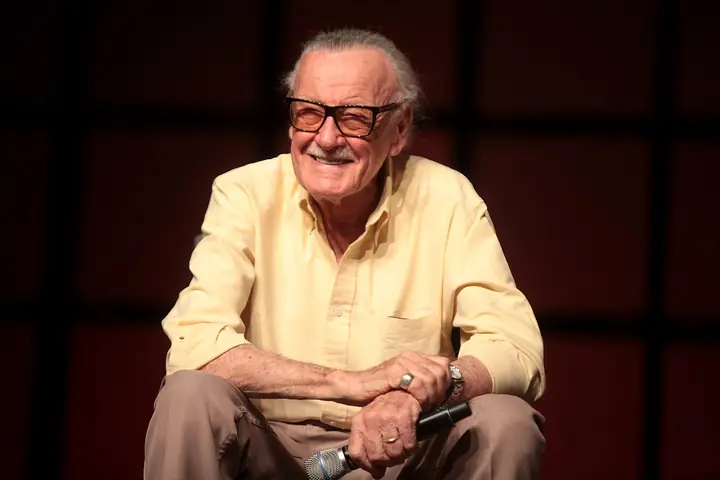
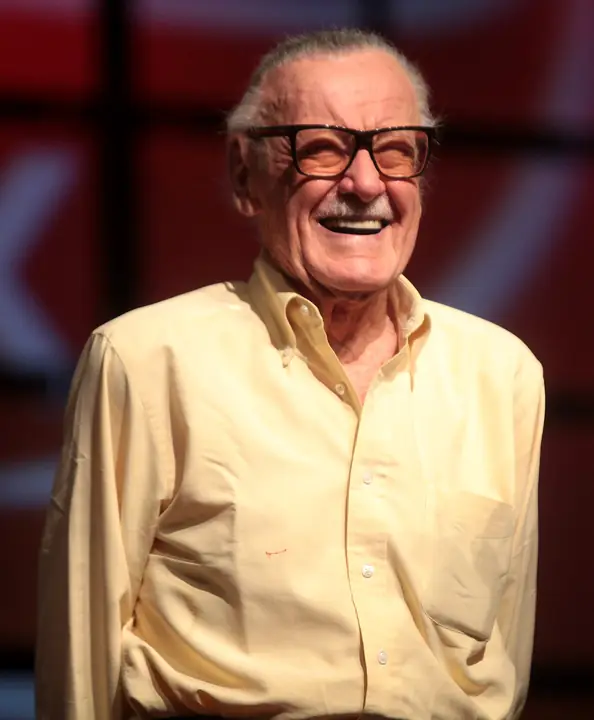
Stan Lee over the years


22 Interesting Facts About Stan Lee
Interesting Facts (14)
- #001
Stan Lee never warmed to the concept of sidekicks, which is why the Marvel Comics universe has almost no second-tier supporting characters standing beside its superheroes. In his view, heroes should stand alone at the center of the story, and this became one of the cornerstones of Marvel's character-driven storytelling. The approach set Marvel apart from the crowds of sidekicks common in other comics of the era and helped it forge a distinct identity.
- #002
One of the questions Stan Lee was asked most often was where the idea behind his unforgettable line "With great power comes great responsibility" came from. He always gave the same answer: "I thought of it." The line became identified with the creation of Spider-Man and one of the best-known mottos of the superhero genre. Lee's explanation shows that creativity sometimes emerges naturally, at the most unexpected moment.
- #003
Because of his advancing age, Stan Lee filmed several cameos in advance for future films as a precaution. The first of these cameos released after his death appeared in the 2019 film Captain Marvel. The film also included a special tribute to Lee in Marvel Studios' opening credits. The gesture underscored Lee's indispensable place in the Marvel Cinematic Universe and his lasting impact on fans.
Stan Lee: a sceneImage: Wikimedia Commons · Gage Skidmore from Peoria, AZ, United States of America, CC BY-SA 2.0 - #004
After retiring from his active role at Marvel Comics, Stan Lee was invited to write a limited series for Marvel's biggest rival, DC Comics. In this series, titled 'Just Imagine' and published in 2001, DC characters such as Superman, Batman, Wonder Woman and Flash were reinterpreted by Lee with different origin stories and personalities. The project proved that Lee's creative vision was not limited to Marvel and could be adapted to other universes as well.
- #005
Stan Lee's contract stipulated that he had to appear in every film based on a Marvel character attributed to him. Thanks to this clause, Lee made cameos as a hot dog vendor in X-Men (2000), a man at the fair in Spider-Man (2002), an old man at the intersection in Daredevil (2003), a security guard in Hulk (2003), a man fleeing the debris in Spider-Man 2 (2004), Willie Lumpkin in Fantastic Four (2005), a man holding a hose in X-Men: The Last Stand (2006) and a man in Times Square in Spider-Man 3 (2007). These cameos became his way of meeting fans and an indispensable part of Marvel films.
- #006
As of 2015, there were four X-Men films in which Stan Lee did not make a cameo appearance: X2: X-Men United (2003), X-Men Origins: Wolverine (2009), X-Men: First Class (2011) and X-Men: Days of Future Past (2014). Fans wondered why Lee was absent from these films. At conventions, Lee usually gave a joking answer to the question: "Nobody asked me." The reply shows that his cameos were in fact by invitation and that he was not included in every film.
Stan Lee: a sceneImage: Wikimedia Commons · Gage Skidmore, CC BY-SA 3.0 - #007
Stan Lee's Willie Lumpkin cameo in the first Fantastic Four film was the first time he played a real character who had appeared in Marvel comics. The character's inclusion in the film came about on a suggestion from Thing makeup artist Bart Mixon to producer Kevin Feige. The script was rewritten along those lines and Lee was given the role of the mailman Willie Lumpkin. The cameo showed that Lee could appear in the films not only as himself but also as part of the Marvel universe.
- #008
Stan Lee did not much care for the 1970s live-action Spider-Man television series. He served as a script consultant on the show but found it 'too childish.' He also felt Spider-Man was treated like a 'cardboard character' in the series. Lee's criticisms show how attached he was to his character and how he sought fidelity in adaptations.
- #009
In the 1960s, Stan Lee created Marvel Comics characters that gave superheroes more complex and human traits. He also established continuity across different series, creating the sense that the characters lived in a shared universe. However, Lee's 'plot first' writing method meant that the artists he worked with, particularly Jack Kirby and Steve Ditko, played a significant role in shaping the stories. As a result, debates arose over the true creative credit for some characters.
- #010
Stan Lee is the only actor to appear in every film of the Marvel Cinematic Universe (Earth-19999). In the series, which began with Iron Man (2008) and ended with Avengers: Endgame (2019), Lee made a brief cameo in each film. He appeared in all of these films except Spider-Man: Far from Home (2019), and also served as an executive producer. Lee's cameos became an indispensable part of the MCU and were eagerly awaited by fans.
- #011
On Friday, October 28, 2016, Los Angeles Mayor Eric Garcetti declared that day and the weekend of October 29-30 'Stan Lee Day.' The special day was proclaimed to celebrate the sixth 'Stan Lee's Comikaze Expo' held at the Los Angeles Downtown Convention Center. The event was later renamed 'Stan Lee's Los Angeles Comic Con.' Expressing his gratitude for the honor, Lee joked that the city's streets would be closed as they were for the mayor's visit.
- #012
Stan Lee died in 2018, the same year as Steve Ditko, the co-creator of Spider-Man. While Lee's death received wide coverage in the press, Ditko's death was almost overlooked. The situation was likened to what happened between DC Comics' Batman creators Bob Kane and Bill Finger. Kane was credited as Batman's sole creator, while Finger's contributions were long ignored. This difference in the deaths of Lee and Ditko brought debates about creativity and credit in comic book history back to the fore.
- #013
Stan Lee's wife, Joan Lee, wrote a single novel titled 'The Pleasure Palace' and submitted it to the DELL publishing house. In 1987, the novel became the publisher's best-selling paperback of the month. Joan Lee's success demonstrated her own writing talent. Stan Lee often said he was proud of his wife's achievement.
- #014
Beyond his role in creating classic Marvel characters, Stan Lee was also instrumental in weakening censorship in mainstream comics. At the official request of the Radiological Health Division of the US Public Health Service, part of the Department of Health, Education and Welfare, he decided to write a story dealing with drug addiction. In this story, written for The Amazing Spider-Man in 1971, Peter Parker's friend Harry Osborn has a bad experience with LSD and nearly dies. This bold step paved the way for the strict rules of the Comics Code to be relaxed and for comics to tackle more realistic subjects.
Characters & Cast (2)
- #015
Stan Lee always wanted to play the character J. Jonah Jameson in the Spider-Man film adaptations. When the films were made, however, he accepted that his age made him unsuitable for the role and praised J.K. Simmons's performance in it. Simmons's take on the journalist Jameson more than met Lee's expectations. Lee's remarks show his attachment to the characters and the importance he placed on adaptations.
- #016
Stan Lee considered the character Percy Blakeney, played by Leslie Howard in the 1934 film The Scarlet Pimpernel, to be the first true film superhero. The character portrayed an aristocrat who delivered justice under a secret identity and was influential in shaping Lee's understanding of superheroes. Lee often referenced the film, emphasizing that the roots of the superhero genre also existed in cinema.
Easter Eggs & References (1)
- #017
Stan Lee appeared as a jury member in a dream sequence in the 1989 film The Trial of the Incredible Hulk. The film was one of the television adaptations of the Hulk and stands as an early example of Lee's cameos. This small role can be considered the beginning of his tradition of appearing in Marvel productions. The cameo reinforced Lee's presence in the world of film and television.
Career & Awards (3)
- #018
During World War II, Stan Lee served in the US Army's Training Film Division. His military classification was listed as "playwright," a title given to only nine people in the army. In this role, Lee wrote manuals, training films, slogans and cartoons. The experience helped him hone his writing skills and laid a solid foundation for his postwar comics career.
- #019
Stan Lee considered the 1995 film Mallrats the first film in which he truly played a leading role. In the comedy, directed by Kevin Smith, Lee played himself and took on a significant part. The performance was a turning point in Lee's acting career and led him to take a more active place in the film world. Mallrats became a cult favorite among Lee's fans.
- #020
The first story Stan Lee wrote was a fully text-based story titled 'Captain America Foils the Traitor's Revenge,' published in Captain America Comics #3 in 1941. The story marks the beginning of Lee's career as a comic book writer. At the time, visual storytelling generally took precedence in comic books, but Lee's text-heavy story demonstrated his writing ability at an early age. This first experience laid the groundwork for Lee to become one of Marvel's most important writers.
Life & Family (2)
- #021
In the 1960s, Judy Garland's daughter Lorna Luft lived with Stan Lee and his family for a time while her mother was in rehabilitation. Lorna was close friends with Stan's daughter J.C. Lee and stayed with the Lee family for about a month, until she left for California to live with her father. This period is one of the rare known anecdotes about Lee's family life and shows how hospitable he was to those close to him.
- #022
Stan Lee always ended 'Stan's Soapbox,' his weekly column published in every Marvel Comics comic book, with the phrase 'Excelsior!' The word, of Latin origin, means 'ever upward' and reflects Lee's optimistic and determined personality. The phrase quickly became one of Lee's signature sayings and was embraced by his fans. Lee's column was an important platform that allowed him to communicate directly with readers.
Related pages
- Mario Puzo — Stan Lee comes up in the facts on that page
- Big Hero 6 — Stan Lee comes up in the facts on that page
- Deadpool & Wolverine — Stan Lee comes up in the facts on that page
Sources & editorial notes
Reference databases
- Wikipedia
- IMDb
Information from external sources is independently selected, consolidated and edited by Arka Evren. Sources are listed for verification and further reading. Encyclopedia text is used under its licence (CC BY-SA). How we work