

FILM · 1993 · USA
Schindler's List
- Genre
- Biography, Drama, History
- Release date
- February 4, 1994
- Runtime
- 196 min
- Directed by
- Steven Spielberg
- Written by
- Steven Zaillian
- Based on
- Thomas Keneally (book)
- Country
- United States
- Language
- English, Hebrew, German, Polish, Latin
- Filmed in
- Oswiecim, Malopolskie, Poland · Kraków, Malopolskie, Poland · Jerusalem, Israel
- Stars
- Liam Neeson, Ralph Fiennes, Ben Kingsley, Caroline Goodall
- IMDb rating
- 9.0 / 10 (1,613,663 votes)
- Awards
- 91 wins, 140 nominations (Oscar: 7 wins, 12 nominations)
- Budget
- 22,000,000 USD
- Box office
- 322,161,245 USD
- Rated
- R
- Studio
- Amblin Entertainment
236 archived facts 7 topics 1 source Last reviewed Nov 2026
The true story of how businessman Oskar Schindler saved over a thousand Jewish lives from the Nazis while they worked as slaves in his factory during World War II.

236 Interesting Facts About Schindler's List
Interesting Facts (91)
- #001
The set decorator on this film, who shared the Best Art Direction Academy Award with Allan Starski, is named Ewa Braun. Eva Braun was also the name of Adolf Hitler's mistress. Billy Crystal later said that he regretted not being the host of the Oscars that year because he heard the name on television and wanted to call host Whoopi Goldberg right away and point out the odd coincidence.
- #002
To gather costumes for 20,000 extras, the costume designer took out advertisements seeking clothes. As economic conditions were poor in Poland, many people were eager to sell clothing they still owned from the 1930s and 1940s.
- #003
Steven Spielberg refuses to autograph any materials related to this film.
- #004
Though Oskar Schindler did in fact have a Jewish accountant named Itzhak Stern, his role was expanded in the movie, where he served as a composite of several accountants Schindler had working for him.
- #005
Steven Spielberg actively pursued the project when he noticed the increasing antisemitism and Neo-Nazism in the 1990s, basically the same sentiments that had led to the Holocaust in the first place. He was also horrified that Holocaust deniers were being taken increasingly seriously in the media. His resolve to make the film was further strengthened when studio executives asked him why he didn't simply make a donation of some sort, rather than wasting everyone's time and money on a depressing film.
- #006
The most expensive black-and-white film to date. The previous record was held for over thirty years by another film set during World War II, The Longest Day (1962).
- #007
Steven Spielberg waited ten years to make the film, because he felt he wasn't ready to tackle the Holocaust in 1983 at the age of thirty-seven.
- #008
Several actresses broke down when filming the shower scene, including one who was born in a concentration camp.
- #009
Steven Spielberg watched episodes of Seinfeld (1989) every night after work to lighten his mood.
- #010
In October 1980, author Thomas Keneally was on his way back to Australia after a book signing when he stopped en route to the airport to buy a new briefcase in a Beverly Hills luggage shop owned by Leopold Pfefferberg, who had been one of the 1,200 saved by Oskar Schindler. In the fifty minutes Keneally spent waiting for his credit card payment to clear, Pfefferberg persuaded him to go to the back room where the shopkeeper kept two cabinets filled with documents he had collected. Pfefferberg, who had told his story to every writer and producer who ever came into his store, eventually wore down Keneally's reluctance, and the writer chose to make the story into his next book.
- #011
Liam Neeson won the role of Oskar Schindler by impressing Spielberg with the compassionate manner he displayed in the Broadway play 'Anna Christie.' Spielberg stated that he saw Schindler's spirit in Neeson's bearing at that moment.
- #012
The names referred to in the film as Poldek Pfefferberg, Leopold Pfefferberg and Leopold Page are in fact the same person, who settled in the United States after the war; the character also served as a consultant on the film.
- #013
The film's depiction of Amon Göth sparked debate among critics. While some argued the character was caricatured, survivors emphasized that the film remained mild compared to reality, noting that the real Göth was savage enough to use babies as target practice.
- #014
Liam Neeson believed Schindler enjoyed manipulating the Nazis. Spielberg had the actor watch footage of Time Warner CEO Steve Ross to help him inhabit this character and had him study Schindler's audio recordings.
- #015
Kevin Costner personally contacted Spielberg to play the role of Oskar Schindler and offered to do it for free. However, Spielberg preferred the lesser-known Liam Neeson so that the audience could focus on the character.
- #016
Steven Spielberg discovered Fiennes through his performance in the film 'A Dangerous Man: Lawrence After Arabia.' The director recognized that uncanny depth in the actor's craft, comparing it to the characters in David Lean's 'Lawrence of Arabia.'
- #017
Steven Spielberg planned to shoot the film in its original languages with English subtitles. He abandoned the idea because he felt there was too much safety in reading subtitles.
- #018
Spielberg refused all royalties, saying any profit from the film would be 'blood money.' All the proceeds went to the Shoah Foundation, which archives testimony from witnesses to genocides worldwide.
- #019
Shaken after watching a cut of the film, John Williams had to go outside for a long walk. On returning, he told Spielberg, 'You need a better composer.' The director's reply was brief and painful: 'I know, but they're all dead.'
- #020
The liquidation of the Krakow ghetto, which occupied only one screenplay page, became a massive twenty-minute sequence through eyewitness testimony. Leopold Pfefferberg's escape after saluting soldiers and using luggage-cleaning as a pretext was adapted directly from his own memories.
- #021
Contrary to popular belief, the person placing flowers on Oskar Schindler's gravestone during the closing credits is actor Liam Neeson, not Steven Spielberg.
- #022
Contrary to popular belief, Marcel Goldberg, not Itzhak Stern, compiled Schindler's list. Many survivors speak of Goldberg with hatred because he altered names for bribes and served his own interests. Mimi Reinhardt, who typed the list, does not appear in the film.
- #023
In Jewish tradition, visitors leave a small stone on a gravestone as a mark of respect. The film's final scene references this ancient custom.
- #024
While touring the camp, Schindler encounters a child in a prisoner's uniform, standing with hands raised and wearing a sign reading 'jestem zlodziejem ziemniaków,' meaning 'I am a potato thief.'
- #025
The first published version of Oskar Schindler's story was Kurt R. Grossman's article 'The Humanitarian Who Outwitted Adolf Hitler,' appearing in the September 1959 issue of Coronet Magazine.
- #026
Fearing he could not do the story justice, Spielberg offered the director's chair to figures including Martin Scorsese, Roman Polanski, and Billy Wilder. Wilder in particular persuaded Spielberg to direct it himself.
- #027
A copy of the original list found in Thomas Keneally's archive is now preserved at the National Library of New South Wales in Australia. Following restoration, this historic thirteen-page document is displayed in the library's museum section.
- #028
Liam Neeson internalized the pleasure Schindler took in regarding the Nazis as fools and outsmarting them. Footage of Time Warner CEO Steve Ross shown to him by Spielberg, together with original audio recordings, was crucial to finding the character's distinctive tone.
- #029
Among the crowd crossing the field in the final scene is an actual 'Schindler Jew,' personally saved by Oskar Schindler.
- #030
Concerned about the emotional burden of Schindler's List, Spielberg had a condition added to his contract requiring him to make Jurassic Park first.
- #031
The piece the officers debate as Bach or Mozart during the Krakow ghetto raid is actually Bach's English Suite No. 2.
- #032
Thomas Keneally said Spielberg showed him a six-hour rough cut that was far more powerful than the final version. As of 2016, however, this extended version had never been officially released anywhere.
- #033
Oliwia Dąbrowska, who plays the girl in the red coat, is not Roman Polanski's real-life cousin. Roma Ligocka, who survived the horrors of war, later wrote a book about her life, The Girl in the Red Coat.
- #034
Moshe Bejski, mentioned when Schindler scolds Stern, is not fictional. He was a real hero who prepared Schindler's forged documents and became a judge on Israel's Supreme Court after the war.
- #035
Throughout filming, Spielberg lived in a Krakow suburb with his wife Kate Capshaw and their five children. He said his family's presence was his greatest support in overcoming the emotional collapse he experienced during those dark days.
- #036
To suit the film's tone, Spielberg avoided the familiar Amblin Entertainment logo, using only the words 'From Amblin Entertainment' instead.
- #037
Adolf Hitler's name is spoken only twice, both times in the greeting 'Heil Hitler.' This reflects Spielberg's decision to focus on civilians' everyday suffering rather than a grand political account of the war.
- #038
Schindler's wager with Goeth over a game of twenty-one to save Helen Hirsch is not really gambling but a demonstration of his ability to manipulate the Nazis. Its terms are structured so that Goeth loses Helen regardless of the outcome.
- #039
ProSieben's interruption of the German television premiere with advertisements caused outrage in the Jewish community. Following protests by figures including Ignatz Bubis and Jerzy Kanal, the broadcast was limited to one commercial break. Today, it remains one of the rare films shown on commercial channels without advertisements and with its full credits.
- #040
Seeking a false pretext to start World War II, Germany dressed executed prisoners in Polish uniforms to fabricate a Polish attack on a radio station. Oskar Schindler supplied the uniforms and documents for this operation.
- #041
During the ghetto liquidation, an SS soldier shooting a Jewish child triggers a heated argument among other soldiers. The DVD subtitles reveal they are arguing not about the child's death but about a soldier being in the line of fire and accusing one another of careless shooting.
- #042
The opening Sabbath service was a deliberate choice by Spielberg. He thought showing normal family life before the persecution of Jews began would contrast powerfully with the tragic picture at the end.
- #043
While working on Schindler's List and Jurassic Park simultaneously, Spielberg communicated with Industrial Light & Magic by satellite four times a week. He describes this 'bipolar' process as an intense experience in which he received pictures through one channel and sound through another and worked on the editing in his spare time.
- #044
Czech director Juraj Herz claimed the scene in which the women mistake the shower for a gas chamber was taken from his film Zastihla me noc. Although he wanted to sue, financial difficulties forced him to abandon the attempt.
- #045
Roman Polanski, who declined the offer to direct, admitted years later that Spielberg had handled the subject far more objectively and successfully than he could have.
- #046
During a postwar visit to Israel, Oskar Schindler was asked what happened to the gold ring the survivors had given him. He honestly replied that he had sold it to buy alcohol.
- #047
The producers rejected celebrated designer Saul Bass's poster design, which featured a list of names surrounded by barbed wire.
- #048
When screenwriter Frederic Raphael praised the film's depiction of the Holocaust, Stanley Kubrick disagreed: 'This film isn't about the Holocaust; it's about success. The Holocaust is about six million people dying. This is about six hundred who survived.'
- #049
When 'Yerushalayim Shel Zahav,' a song popular before the 1967 war, caused laughter at Israeli screenings, the filmmakers redubbed the scene with the period-appropriate song 'Eli Eli.'
- #050
According to Liam Neeson, this was the first feature Spielberg shot without storyboards.
- #051
The overwhelming impact of Schindler's List led Stanley Kubrick to cancel his own Holocaust project, Aryan Papers. After this masterpiece, Kubrick chose to abandon his project.
- #052
Spielberg was determined to release the film in 1993, the fiftieth anniversary of the Warsaw Ghetto's destruction. While Universal waited for Jurassic Park to be completed, Spielberg entrusted its post-production to George Lucas and began filming in Poland.
- #053
Schindler's pretext that the children were needed to 'polish 45mm shell casings' was an ingenious survival strategy. Seeing the rabbi perform this task at a workbench demonstrates the creativity Schindler used to save more than 1,200 people.
- #054
The cufflinks Schindler wears in the opening scene were given to Spielberg by a cousin who had taken a cruise. They carried the Seabourn logo.
- #055
The epilogue states that fewer than four thousand Jews remain in Poland, while the people Schindler saved have more than six thousand descendants. The closing is dedicated to the memory of more than six million murdered Jews.
- #056
The real Oskar Schindler was often said to resemble George Sanders and Curd Jürgens physically.
- #057
In Jewish tradition, leaving a small stone on a gravestone is a mark of respect. The actors and actual Schindlerjuden, or Schindler Jews, honor this ancient tradition in the final scene.
- #058
Dustin Hoffman said he had been offered Itzhak Stern but missed the role because of a communication breakdown with his agent. He nevertheless described Ben Kingsley's performance as 'a wonderful job.'
- #059
Before filming, Steven Spielberg watched Good Evening, Mr. Wallenberg (1990) six times to absorb the atmosphere.
- #060
Spielberg used his proceeds from the film to finance Holocaust documentaries including Anne Frank Remembered (1995), The Lost Children of Berlin (1997), and The Last Days (1998).
- #061
The scene of Jews entering the ghetto was filmed elsewhere because a modern radio tower obstructed the view along the historical route.
- #062
To escape the oppressive atmosphere on set, Spielberg watched Seinfeld during breaks. Ironically, the film later became part of Seinfeld's episode 'The Raincoats.' Elina Löwensohn, who plays Diana Reiter, also appeared in the series.
- #063
The meeting between Schindler and Pfefferberg, presented as a job interview, actually happened through Pfefferberg's mother. Pfefferberg had been trying to persuade Spielberg to make the film since 1982.
- #064
The cigarette conversation between Itzhak Stern and Oskar Schindler was adapted from an actual conversation between Edward, Duke of Windsor, who died in 1972, and his doctor.
- #065
John Williams presented Spielberg with two different versions of the main theme. Although Williams preferred the more traditional 'Remembrances,' Spielberg insisted on the more spiritually profound melody, which has become one of cinema's most iconic compositions.
- #066
The oppressive atmosphere on set was occasionally broken by absurd moments. To lift his depressed mood, Spielberg would call Adam Sandler and praise his Saturday Night Live sketches, finding a brief boost to his spirits.
- #067
Steven Spielberg and his wife Kate Capshaw could not hold back tears when they first heard John Williams's main theme.
- #068
In two separate scenes, Amon Göth attends to his manicure instead of stopping the stopwatch while timing Jewish worker Rabbi Menasha Levartov. The same indifference recurs just before he kills an unnamed Jewish child.
- #069
Steven Spielberg refused to shoot inside Auschwitz out of respect for the camp's sanctity. Instead, the death camp scenes were filmed on a replica set built just outside the entrance of Birkenau.
- #070
John Williams, watching the film's cut for the first time, was so deeply shaken that he had to leave the studio and walk for a long time. When he told Spielberg that he deserved a better composer than him, the reply was short and striking: 'I know, but they're all dead.'
- #071
The costume department placed notices across Poland to dress 20,000 extras. The country's economic hardship made it easier for people to put their clothing from the 1930s and 40s up for sale.
- #072
Roughly forty percent of the film was shot with a handheld camera to create a documentary-like sense of reality.
- #073
The flying-bicycle Amblin Entertainment logo, a hallmark of Spielberg's films, did not appear in this film; instead, only the words 'From Amblin Entertainment' were used in the credits.
- #074
Spielberg stated that on this film he felt like a reporter rather than a director; that while setting up scenes, he felt a responsibility to bear witness to history rather than to create a fiction.
- #075
Czech director Juraj Herz claimed that the scene in which the women panic, mistaking the shower room for a gas chamber, was copied frame by frame from his own film Zastihla me noc.
- #076
The poster design by Saul Bass, featuring names surrounded by barbed wire, was rejected by the producers.
- #077
The black-and-white format and handheld cameras, chosen so that the audience would feel as though they were in the same environment as the characters, were considered risky by producers at the time, who feared it would create the perception of an 'art film'.
- #078
In Jewish tradition, when visiting a grave, a small stone is left on the headstone as a sign of respect. In the film's epilogue, the actors and the surviving 'Schindler Jews' covering Oskar Schindler's grave with stones is a tribute to this ancient custom.
- #079
The object a man tears from a doorframe during the evacuation scenes of the Krakow ghetto is a 'mezuzah', which Jews hang on their doorposts to remember the presence of God and which contains passages from the Torah.
- #080
Moshe Bejski, one of the 25 people Amon Göth shot, whom Stern reminds Schindler of, was in real life the man who prepared Schindler's forged documents and later served as a judge on Israel's Supreme Court.
- #081
The 21-game bet Schindler makes with Göth to have Helen Hirsch added to the list is in fact a game of wits. Whatever the outcome of the bet, it is clear Schindler will save Helen; this scene proves his skill at defeating Nazi officers with their own weapons.
- #082
The radio station attack Germany fabricated to justify its invasion of Poland was in fact staged using prisoners who had been killed and dressed in Polish uniforms. Schindler obtained uniforms and documents for this false operation, earning the right to trade in occupied Poland.
- #083
The Sabbath service scene at the film's opening is a deliberate choice by Spielberg. By showing the peace of normal life before the slaughter, the director aimed to create a powerful contrast with the catastrophe to come.
- #084
On one of his post-war visits to Israel, when asked where the gold ring given to him as a gift was, Oskar Schindler answered 'Schnapps'. His admission that he sold the ring to buy liquor honestly reveals his human weaknesses alongside his heroism.
- #085
Stanley Kubrick argued that the film focused not on the Holocaust as a whole but on a small group that survived. Kubrick's remark that "the Holocaust is about 6 million people who get killed" while "Schindler's List is about 600 who don't" did not damage the friendship between the two directors but became an important topic of debate in cinema history.
- #086
Schindler's claim that children could clean shell casings to save them from Auschwitz is a product of the creative intelligence he used to save lives. In later scenes of the film, a rabbi performing this task proves the success of Schindler's plan.
- #087
The film's epilogue states that fewer than 4,000 Jews remained in Poland, yet the Schindler Jews have more than 6,000 descendants. This figure concretely demonstrates the effect of Schindler's actions lasting through generations.
- #088
The cigarette dialogue between Stern and Schindler is adapted from a conversation that took place in real life between the Duke of Windsor and his doctor, increasing the film's dose of realism.
- #089
Contains a major spoiler — show
The original missing list of Schindler's Jews was found in a suitcase together with his written legacy hidden in the attic of Schindler's flat in Hildesheim in 1999. Oskar Schindler stayed there during the last few months before his death in 1974.
- #090
Contains a major spoiler — show
The person who places the flower on top of the stones in the real Oskar Schindler tomb during the closing credits is Liam Neeson, and not Steven Spielberg, as some people think.
- #091
Contains a major spoiler — show
Some controversy remains among critics and filmmakers concerning the portrayal of Amon Goeth (Ralph Fiennes). Some said that he is too stereotypically presented as the evil psychopathic Nazi, yet others claim that the performance didn't go far enough as compared to his real-life counterpart. Holocaust survivors have testified that apart from ordering executions, Goeth himself randomly shot and tortured dozens of people on a daily basis, and even had prisoners torn up by his two dogs. He would also hang victims all around the camp, to the point where there was literally no place you could look without seeing a corpse on display. Most disturbingly, Goeth was rumored to have used babies for target practice. Reportedly, Steven Spielberg saw no need in depicting all these atrocities to show Goeth's evil character.
Production Story (42)
- #092
Steven Spielberg offered the role of Amon Göth to German actor Werner Stocker, but he suddenly fell ill with a brain tumor. He died on May 27, 1993, two weeks after filming wrapped.
- #093
Steven Spielberg opted to make Jurassic Park (1993) before this film in terms of his projects for 1993. It was even written into his contract, because had he made this film first, he would have been too drained to film Jurassic Park.
- #094
In October 1980, author Thomas Keneally was on his way back to Australia after a book signing when he stopped en route to the airport to buy a new briefcase in a Beverly Hills luggage shop owned by Leopold Pfefferberg, one of the 1,200 people saved by Oskar Schindler. During the fifty minutes Keneally spent waiting for his credit card payment to clear, Pfefferberg persuaded him to go to the back room, where the shopkeeper kept two cabinets filled with documents he had collected. Pfefferberg, who had told his story to every writer and producer who came into his store, eventually wore down Keneally's reluctance, and the writer chose to make the story into his next book.
- #095
Kevin Costner expressed an interest in playing Oskar Schindler, and he even contacted Steven Spielberg personally and said he would play the part for free, but Spielberg preferred to cast the relatively unknown Liam Neeson, so the actor's star quality would not overpower the character.
- #096
According to Michael Ovitz, Mel Gibson was interested in playing Oskar Schindler, and was suggested by his agent, but was vetoed by Steven Spielberg because he wanted a "non-movie star." However, Spielberg denied that Gibson was interested in the role. Gibson's casting would've been peculiar, given his history of antisemitism, and the fact that his own father Hutton Gibson was a Holocaust denier.
- #097
Universal optioned the rights to Thomas Keneally's novel for $500,000, two-thirds of which went to the Schindler Organization for surviving "Schindler Jews."
- #098
Months before he landed the title role, Liam Neeson had auditioned for Schindler. Assuming that he'd never get the part, he accepted an offer to play opposite wife-to-be Natasha Richardson in a Broadway revival of Eugene O'Neill's "Anna Christie" at New York's Criterion Center in 1993. One evening after a performance, Neeson was in his dressing room when a knock on the door announced the arrival of Steven Spielberg, wife Kate Capshaw, and her mother. After the show, Neeson saw that the older woman was emotionally moved by the performance, so he hugged her to comfort her. Capshaw noted his kindness and later commented to husband Steven, "That's just what Oskar Schindler would have done." Neeson received a call a week later from Spielberg with the offer of the lead role. Spielberg cited this interaction, rather than his audition, as one of the key reasons Neeson won the role.
- #099
Steven Spielberg offered the job of director to Roman Polanski. Polanski turned it down because the subject was too personal. He had lived in the Krakow ghetto until the age of eight, when he escaped on the day of the liquidation. His mother later died at the Auschwitz concentration camp. After learning this, Spielberg immediately and repeatedly apologized for bringing up such a traumatic memory. However, Polanski would later direct his own movie about the Holocaust which contained many autobiographical elements, The Pianist (2002).
- #100
Schindler is seen meeting Leopold Pfefferberg while looking for a man to find black market goods. In fact, the two men were introduced by Pfefferberg's mother, who had decorated Schindler's apartment in Krakow. Pfefferberg later got in touch with Steven Spielberg by contacting Spielberg's mother, and tried to convince him to make the film in 1982, shortly after the book was published.
- #101
Saul Bass was asked to design the poster for this film. Eventually, his version, consisting of an image of barbed wire spiking paper containing the names of the people Schindler saved, was refused.
- #102
Steven Spielberg left the editing on Jurassic Park (1993) for two weeks so he could start shooting this film in Poland.
- #103
According to Liam Neeson's account on Liam Neeson (2012), this film was the first Steven Spielberg feature film not to be storyboarded.
- #104
Thomas Keneally (the author of the book "Schindler's Ark") has claimed in an interview that he was personally shown a six-hour-plus "rough cut" of the film by Steven Spielberg that he found far better than the final theatrical version. As of 2016, this rough-cut version has never been released in any authorized format.
- #105
Steven Spielberg and Kate Capshaw cried when they first heard John Williams' theme for the film.
- #106
Controversy arose in Germany for the film's television premiere on private channel ProSieben. Protests among the Jewish community ensued when the station intended to televise it with two commercial breaks of 3-4 minutes each. Ignatz Bubis, head of the Central Council of Jews in Germany, said: "It is problematic to interrupt such a movie by commercials". Jerzy Kanal, chairman of the Jewish Community of Berlin, added "It is obvious that the film could have a greater impact [on society] when broadcast unimpeded by commercials. The station has to do everything possible to broadcast the film without interruption." As a compromise, the broadcast included one break consisting of a short news update framed with commercials. Nowadays, when broadcast on private TV channels, this movie is almost always shown without commercials - the only film where this is done. In addition, the entire end credits are shown - also unique to this film.
- #107
The film, as shown in most countries, had the song "Yerushalayim Shel Zahav" ("Jerusalem of Gold") toward the end. When it was shown in Israel, audiences laughed at this, as this song was written before the 1967 war as a pop song. For the Israeli version, the producers then re-dubbed the scene with the song "Eli Eli," which was written by Hannah Senesh during World War II. However, some criticized this decision as a misinterpretation of the scene, since the song serves as a lead-in to a scene that takes place in modern-day Israel (long after the release of "Yerushalayim Shel Zahav") not during the Holocaust.
- #108
Steven Spielberg used proceeds from the film to finance several related documentaries, including Anne Frank Remembered (1995), The Lost Children of Berlin (1997), and The Last Days (1998).
- #109
Steven Spielberg actively pursued the project when he noticed the increasing antisemitism and Neo-Nazism in the 1990s, basically the same sentiments that had led to the Holocaust in the first place. He was also horrified that Holocaust deniers were being taken increasingly seriously in the media. His resolve to make the film was further strengthened when studio executives asked him why he didn't simply make a donation of some sort, rather than wasting everyone's time and money on a depressing film.
- #110
Steven Spielberg initially intended to make the film in Polish and German with English subtitles, but rethought the idea because he felt he wouldn't be able to accurately assess performances in unfamiliar languages.
- #111
It is fitting that this film was released by Universal Pictures. The studio's founder, Carl Laemmle, was a German Jewish immigrant who, both during and after his tenure as head of the studio, used his influence to get several Jewish refugees (including Albert Einstein) passage to, and jobs in, the United States, until his own death in 1939.
- #112
Polish actor Andrzej Seweryn was seriously considered to play Oskar Schindler. He flew to Los Angeles and met with Steven Spielberg and producer Branko Lustig. The audition wasn't perfect because he was too nervous, but Spielberg was satisfied. Seweryn came back to Poland, almost sure he would get the part, but then found out that Liam Neeson was cast to play Schindler. According to Seweryn, Neeson's agents were more convincing, but Neeson himself claimed that Spielberg was finally convinced after seeing him play on stage and meeting him afterwards. Seweryn played the smaller role of German officer Julian Scherner instead.
- #113
After finishing Hook (1991), Steven Spielberg opted to make this film next. Universal Pictures Chairman Sid Sheinberg greenlit the film, on the condition that Spielberg make Jurassic Park (1993) first.
- #114
At Steven Spielberg's request, Aaron Sorkin did an uncredited touch-up and "dialogue wash" on the verbose script.
- #115
When Steven Spielberg first showed John Williams a cut of this movie, Williams was so moved he had to take a walk outside for several minutes to collect himself. Upon his return, he told Spielberg he deserved a better composer. Spielberg replied, "I know, but they're all dead."
- #116
Steven Spielberg has admitted on several occasions that making this film was emotionally draining due to the heavy subject matter. He said that virtually no day went by without him tearing up and crying at a certain point.
- #117
Steven Spielberg cast Ralph Fiennes as Amon Göth after he'd been moved by Fiennes' performance as T.E. Lawrence in A Dangerous Man: Lawrence After Arabia (1992). Spielberg has been a lifelong fan of Sir David Lean's Lawrence of Arabia (1962).
- #118
In a television interview with Larry King on Larry King Live (1985), Dustin Hoffman claimed that he was originally offered the role of Itzhak Stern by Steven Spielberg and accepted it, but was quoted in the media as declining the part due to a mix-up in communication between his agent and Spielberg. However, he praised Sir Ben Kingsley's performance of Itzhak Stern as "a marvelous job".
- #119
As of 2023, of all of the posters of Steven Spielberg films, this is the only one that gives him above-the-title credit as "A Film by Steven Spielberg". His first above-the-title credit was for Raiders of the Lost Ark (1981), and nearly every movie since then says "A Steven Spielberg Film". The only other exception is The Fabelmans (2022), which says "From Steven Spielberg".
- #120
The Amblin Entertainment logo, showing the bike flying past the moon from E.T. the Extra-Terrestrial (1982), a regular sight at the end of almost every Steven Spielberg film, was not shown in this film. The final credit simply reads, "From Amblin Entertainment."
- #121
As a producer, Steven Spielberg offered the directing duties on this film to numerous colleagues because he was afraid he couldn't do the story justice. He was turned down by Martin Scorsese (who was interested but ultimately felt it was a subject that should be done by a Jewish director; he agreed to hand the project to Spielberg, who was working on Cape Fear (1991), which Scorsese took over), Roman Polanski (who didn't feel he was yet ready to tackle the Holocaust after surviving it in childhood), and Billy Wilder (who wanted to make this as his last film). Apparently, it was Wilder who convinced Spielberg to direct it.
- #122
Roman Polanski, who turned down the chance to direct the film, later commented, "I certainly wouldn't have done as good a job as Spielberg [Steven Spielberg] because I couldn't have been as objective as he was."
- #123
At his insistence (citing that it would be "blood money"), all royalties and residuals from this movie that would normally have gone to Steven Spielberg instead are given to the Shoah Foundation, which records and preserves written and videotaped testimonies from survivors of genocide worldwide, including the Holocaust.
- #124
Ralph Fiennes was cast as Amon Göth after Steven Spielberg viewed his performances in A Dangerous Man: Lawrence After Arabia (1992) and Emily Brontë's Wuthering Heights (1992). Spielberg said of Fiennes' audition that, "I saw sexual evil. It is all about subtlety: there were moments of kindness that would move across his eyes and then instantly run cold."
- #125
Harrison Ford was the first choice for the title role, but declined, saying that some people would not be able to look past his Indiana Jones persona to see the importance of the film. It was also felt that Schindler needed to be portrayed by a non-Jewish actor.
- #126
John Williams revealed that settling on the main theme proved difficult. The composer gave Steven Spielberg two options and was surprised by his preference: "I wrote two, principally the one that we know and another one which is called 'Remembrances' and we recorded both of them with Itzhak Perlman. 'Remembrances' was my preference, but I played both for Steven and he said, 'No, no, no, it should be this one.' I said, 'Really? I like the other one better.' He said, 'No, there's a spiritual aspect to this one.'"
- #127
When the film was to be shown in the Philippines, the censors decided to cut out certain scenes of nudity and violence. When Steven Spielberg learned of this, he wanted to pull the film unless it was shown as it is. So Philippine President Fidel Ramos intervened and overruled the censors, and the film was shown without any cuts. There was a similar situation in Malaysia, but with no intervention. Hence, the film was banned.
- #128
Juliette Binoche was offered a role, which she has described in interviews as a woman who was to be raped and then murdered, but she turned it down. She had already turned Steven Spielberg down once that same year, passing on the role of Ellie Sattler in Jurassic Park (1993) to make Three Colors: Blue (1993).
- #129
After the book's author, Thomas Keneally, wrote a miniseries-length script, Steven Spielberg hired Kurt Luedtke to write the screenplay, but Luedtke gave up after four years of work, reportedly because he could not come up with a believable reason for Schindler's conversion from opportunist to sympathizer. Steven Zaillian, who had already written a script when Martin Scorsese was still attached to direct, was called back. Together with Spielberg, Zaillian conceived the scene in which Schindler witnesses the liquidation of the ghetto, with the focus on the girl in the red coat.
- #130
Spielberg decided to make the film in response to rising antisemitism and neo-Nazism in the 1990s. When studio executives suggested donating money rather than addressing such a heavy subject, his determination only strengthened.
- #131
Sidney Lumet declined the offer to direct, explaining that he had already addressed the Holocaust in The Pawnbroker (1964).
- #132
Contains a major spoiler — show
The Krakow ghetto "liquidation" scene was only a page in the script, but Steven Spielberg turned it into twenty pages and twenty minutes of screentime "based on living witness testimony". For example, the scene in which Leopold Pfefferberg escapes capture by German soldiers by telling them he was ordered to clear the luggage from the street and saluting them was taken directly from his own account.
- #133
Contains a major spoiler — show
The original missing list of Schindler's Jews was found in a suitcase together with his written legacy hidden in the attic of Schindler's flat in Hildesheim in 1999. Oskar Schindler stayed there during the last few months before his death in 1974.
Behind the Scenes (25)
- #134
Steven Spielberg was able to get permission to film inside Auschwitz, but chose not to, out of respect for the victims, so the scenes of the death camp were filmed outside the gates on a set constructed in a mirror image of the real location on the other side.
- #135
Steven Spielberg commented that he felt more like a reporter than a filmmaker - he would set up scenes and then watch events unfold, almost as though he were witnessing them rather than creating a movie.
- #136
To gather costumes for 20,000 extras, the costume designer took out advertisements seeking clothes. As economic conditions were poor in Poland, many people were eager to sell clothing they still owned from the 1930s and 1940s.
- #137
Producer Branko Lustig recruited homeless people to be extras when the regular extras didn't show up on set.
- #138
During production, the atmosphere was so grim and depressing that Steven Spielberg asked his friend Robin Williams if he could tell some jokes and do comedy sketches while Spielberg watched episodes of Seinfeld (1989). Some of Williams' sketches, played through the speaker phone to the cast and crew, ended up being part of the dialogue material for his character, the Genie, in Aladdin (1992).
- #139
Several actresses broke down when filming the shower scene, including one who was born in a concentration camp.
- #140
Steven Spielberg gave Liam Neeson home movies of his mentor Steve Ross, the late chairman of Time Warner, to help him develop his portrayal of Schindler.
- #141
Director Steven Spielberg often watched episodes of Seinfeld (1989) during the shooting to relieve some of the stress of the material. Ironically, this film became a part of Seinfeld later on: episode The Raincoats (1994) features a storyline where Jerry can't have sex with his girlfriend because of his parents' overlong stay at his house, so he makes out with her at a movie theater. However, the theater is showing "Schindler's List", and Newman rats him out to his Jewish parents. Incidentally, Elina Löwensohn who plays Diana Reiter in Schindler's List, also appeared in Seinfeld.
- #142
Steven Spielberg, his wife Kate Capshaw, and their five children rented a house in suburban Kraków for the duration of filming. He later thanked his wife "for rescuing me ninety-two days in a row ... when things just got too unbearable".
- #143
During filming, Sir Ben Kingsley (Itzhak Stern) kept a picture of Anne Frank, the young girl who died in a concentration camp and whose personal diary was published after the Holocaust, in his coat pocket. Some years later, Kingsley played Otto Frank, Anne's father, in Anne Frank: The Whole Story (2001). Other sources say that both Steven Spielberg and Kingsley simultaneously wrote down the word that described Stern's part in the story; Kingsley wrote 'witness', while Spielberg wrote 'conscience'. Kingsley reportedly kept both pieces of paper with him during the shoot to constantly remind him of his dual role in the film.
- #144
Ralph Fiennes put on twenty-eight pounds (thirteen kilograms) by drinking Guinness for his role of Amon Goeth. Steven Spielberg cast him because of his "evil sexuality".
- #145
During filming, Steven Spielberg called Adam Sandler, who wanted to offer praise for the "Red Hooded Sweatshirt" sketch on Saturday Night Live (1975) which helped him laugh on an otherwise depressing movie set.
- #146
According to the art directors, no green paint or clothing was used on the set because the color would not show up well on black and white film. Special attention was paid to how much lighting or paint was used, in order to appear correctly on film, regardless of how unrealistic it seemed in real life.
- #147
Production designer Allan Starski's replica of the forced labor camp at Plaszow was one of the largest sets ever built in Poland. The set was constructed from the plans of the original camp. The production built thirty-four barracks and seven watchtowers, and also re-created the road into the camp that was paved with Jewish tombstones.
- #148
In the epilogue, all actors accompany the original Schindlerjuden they portray in the movie in pairs.
- #149
The shots featuring a red-coat-girl came from a story that Audrey Hepburn told Steven Spielberg while they were filming her final movie Always (1989). She told him of an incident during World War II where she saw a little girl with the same attire while the other people were loaded onto trains. That moment was forever etched in her memory, and it struck Spielberg when he made this film. Due to the amount of violence and horror depicted, Spielberg made Oliwia Dabrowska, the red-coat-girl, and her parents to promise him not to watch the film until she reaches eighteen (in 2007). True to what he said, she was horrified of the result when she violated the promise at the age of eleven.
- #150
Poldek Pfefferberg's two-fingered salute to the German patrol is in fact the official salute of the Polish army. The character used this gesture, which the Germans did not understand, as a clever improvisation to save the situation.
- #151
Oliwia Dabrowska, who played the girl in the red coat, was only three years old during filming. Dabrowska, who promised Spielberg she would not watch it until she was 18, admitted that the trauma she experienced when she watched the film at 11 was a mistake on her part.
- #152
The final scene in which the actual survivors visit Oskar Schindler's grave was not in the screenplay. Spielberg developed the idea during filming, and assembling the survivors at short notice was a major logistical achievement.
- #153
Spielberg admitted that during filming he felt more like a reporter than a filmmaker. Letting events unfold naturally rather than staging the scenes made him feel he was witnessing history rather than telling a story.
- #154
Filming the shower scene was emotionally exhausting. Spielberg spoke as little as possible on set to make the actresses' panic in the enclosed space feel realistic. Their screams were entirely improvised.
- #155
Oliwia Dabrowska, who played the girl in the red coat, was only three during filming. Although she promised Spielberg not to watch the film until she was eighteen, she saw it at eleven and admitted the trauma stayed with her for years.
- #156
As of 2017, Schindler's List remained the only Hollywood production cinematographer Janusz Kaminski had shot in his native Poland.
- #157
To preserve the visual integrity of the black-and-white aesthetic, no green object or garment was used on set. The lighting and decor were designed to perfect the gray-scale equivalents of colors.
- #158
This film is the first project on which Janusz Kaminski worked with Spielberg as cinematographer; from that date on, Kaminski has worked on all of the director's films.
Characters & Cast (26)
- #159
Nightclub maître d'hotel in Oskar Schindler's first scene. Lustig is one of this movie's producers and a Holocaust survivor (upon receiving his Oscar, he recited his serial number, A3317).
- #160
Ralph Fiennes put on 28 pounds (13 kg) to play the role. He watched historic newsreels and talked to Holocaust survivors who knew Göth. In portraying him, Fiennes said "I got close to his pain. Inside him is a fractured, miserable human being. I feel split about him, sorry for him. He's like some dirty, battered doll I was given and that I came to feel peculiarly attached to."
- #161
Embeth Davidtz deliberately chose not to meet Helen Hirsch, the character she was playing in the film, until after shooting had been completed.
- #162
Oliwia Dabrowska was just three years old when she played the part of the red coat girl. Steven Spielberg made her promise that she wouldn't watch the movie until she was at least 18 years old. Dabrowska broke her promise and watched it when she was 11. She said later that it was mistake and that the movie traumatised her.
- #163
Though Oskar Schindler did in fact have a Jewish accountant named Itzhak Stern, his role was expanded in the movie, where he served as a composite of several accountants Schindler had working for him.
- #164
In reality, it was not Itzhak Stern who helped Oskar Schindler put the list together, but Marcel Goldberg. Many survivors who speak of Goldberg do so with disdain, as he was unscrupulous in deciding who ended up on the list, reportedly accepting bribes from some survivors, taking names off the list to add theirs instead. Secretary Mimi Reinhardt typed up the list, but she is not portrayed in the film.
- #165
After filming this movie, Liam Neeson (Schindler) and Ralph Fiennes (Göth) became very good friends. Eventually they worked again together in Clash of the Titans (2010) and Wrath of the Titans (2012) as gods Zeus (Neeson) and Hades (Fiennes).
- #166
When survivor Ludmila Page was introduced to Ralph Fiennes on the set, she began shaking uncontrollably, as he reminded her too much of the real Amon Göth.
- #167
In a 1994 interview, Dustin Hoffman stated that he had met with Spielberg about the role of Itzhak Stern but that, due to a breakdown in communication, he believed the director had turned him down for the role.
- #168
Ralph Fiennes gained 13 kilos to enter Amon Göth's dark world and held in-depth conversations with survivors. Describing his character as 'a broken, wretched human being inside,' Fiennes walked masterfully along that fine line between the hatred and pity he felt for Göth.
- #169
Spielberg describes Fiennes's audition performance as 'a sexual evil.' According to the director, that ice-cold gaze that came immediately after the fleeting crumbs of compassion that appeared in the actor's eyes summed up the character's entire complexity.
- #170
Names such as Tim Roth and Werner Stocker were in the running for the role of Amon Göth. Although an offer was made to Stocker, the actor's death from a brain tumor during filming created a sorrowful void in the project.
- #171
Strong candidates such as Stellan Skarsgård and Andrzej Seweryn were considered for the role of Oskar Schindler. Although Seweryn lost the part after being overcome by nerves at his audition, he still appeared in the film as the German officer Julian Scherner.
- #172
Ralph Fiennes gained thirteen kilograms to play Amon Göth. After meeting Holocaust survivors to prepare, Fiennes said he tried to understand the broken, wretched human inside the character and felt a strange attachment to him.
- #173
Spielberg chose Ralph Fiennes as Amon Göth after being impressed by his performance in A Dangerous Man: Lawrence After Arabia. Spielberg has been a lifelong admirer of David Lean's Lawrence of Arabia.
- #174
Steven Spielberg described Ralph Fiennes's audition as 'sexual evil.' For the director, details such as momentary traces of tenderness appearing in the actor's eyes before quickly turning cold perfectly captured the character's dark depths.
- #175
Scherner's line 'Don't develop a weakness for Jewish women' originally belonged to Göth in the screenplay. Reassigning it caused a logical disconnect in the next scene, when Göth says, 'When I said they had no future, I didn't mean tomorrow.'
- #176
According to Michael Ovitz, Mel Gibson was suggested for Oskar Schindler, but Spielberg preferred a less familiar face rather than a 'movie star.'
- #177
Liam Neeson landing the lead stemmed from a chance moment backstage at a Broadway play. When Spielberg and Kate Capshaw saw Neeson embracing Capshaw's mother, they decided that this warmth captured Schindler's spirit.
- #178
Juliette Binoche declined the role offered to her because the character would be raped and murdered. She also turned down Ellie Sattler in Jurassic Park that same year.
- #179
Polish actor Andrzej Seweryn was a serious contender for Oskar Schindler. Encouraged by his discussions with Spielberg, he was deeply disappointed to learn the role had gone to Liam Neeson, but he still appeared as German officer Julian Scherner.
- #180
Steven Spielberg discovered Ben Kingsley for Itzhak Stern through his performance in Gandhi. He cast Liam Neeson as Oskar Schindler after seeing him perform in the Broadway play Anna Christie.
- #181
The person who places flowers on Oskar Schindler's grave at the end of the film is not Spielberg, as is commonly believed, but lead actor Liam Neeson.
- #182
The replica of the Plaszow camp built by production designer Allan Starski was one of the largest sets in Polish history. Alongside the thirty-four barracks and seven watchtowers constructed in keeping with the original plans, the camp road was paved with real Jewish headstones.
- #183
The fact that Scherner's line 'God forbid you show a fondness for Jewish skirts, there is no future in it' actually belonged to Göth in the script creates a logical gap in the following scene. Göth's line 'When I said they have no future, I didn't mean tomorrow' is left hanging because of this script error.
- #184
Contains a major spoiler — show
Some controversy remains among critics and filmmakers concerning the portrayal of Amon Goeth (Ralph Fiennes). Some said that he is too stereotypically presented as the evil psychopathic Nazi, yet others claim that the performance didn't go far enough compared to his real-life counterpart. Holocaust survivors have testified that apart from ordering executions, Goeth himself randomly shot and tortured dozens of people on a daily basis, and even had prisoners torn up by his two dogs. He would also hang victims all around the camp, to the point where there was literally no place you could look without seeing a corpse on display. Most disturbingly, Goeth was rumored to have used babies for target practice. Reportedly, Steven Spielberg saw no need in depicting all these atrocities to show Goeth's evil character.
Easter Eggs & References (17)
- #185
As Schindler is given a tour of the camp, he passes a boy in prisoner's clothing with his hands raised over his head and a sign hanging over him. It reads "jestem zlodziejem ziemniaków", "I am a potato thief."
- #186
During the scene where Schindler is meeting with Auschwitz camp commander Rudolf Höss trying to get his workers back, Höss tells him, "You are not the only industrialist who needs labor, Herr Schindler. I remember earlier this year, IG Farben ordered a trainload of Hungarians for its chemical factory. The train came in through the archway and the officer in charge of the selection went immediately to work, and sent 2,000 of them straight away to Special Treatment. It is not my task to interfere with the processes that take place down here." IG Farben was the German chemical conglomerate which developed Zyklon B, the deadly gas that was used to exterminate hundreds of thousands of Jews and others at Auschwitz. After the war, several IG Farben executives were tried at Nuremberg over their complicity in the Holocaust.
- #187
At one point in the film, Oskar Schindler has to free a group of his workers' children from Auschwitz, so he tells an SS camp worker that the children are all essential workers for his factory because of their small hands, saying, "They polish the insides of 45mm shell steel casings. How else can you polish the insides of 45mm shell steel casings, you tell me?" Dumbfounded, the SS officer consents to releasing all the children to Schindler, who reunites them with their parents at his factory. The audience learns the answer to his question about "45mm shell steel casings" just a few scenes later, as Schindler interrupts Rabbi Menasha Levartov to ask why he has not begun making preparations for the Sabbath, something the Jewish prisoners had not done openly throughout the war. It happens that the Rabbi was using a polishing brush attached to a long spindle held in a bench grinder, polishing the insides of 45mm shell steel casings. It was one more example of the creativity that allowed Schindler to save over 1,200 Jewish prisoners and shelter them from Adolf Hitler's so-called "Final Solution".
- #188
The cufflinks Schindler is seen putting on in the opening scene have the logo of the Seabourn cruise line on them. Steven Spielberg was given them as a gift by his cousin, who had taken a Seabourn cruise.
- #189
While the Nazis are moving confiscated luggage, one of the bags is labelled "Sonnenschein". Ralph Fiennes (Amon Göth) appeared in the Holocaust movie Sunshine (1999) as Ignatz Sonnenschein.
- #190
During the list scene, there was an exchange between Itzhak Stern and Oskar Schindler. Stern--"How many cigarettes do you smoke?" Schindler--"Too many". This was taken directly from a real-life exchange in which Edward the Duke of Windsor was asked the exact question by his physician weeks before his death in 1972.
- #191
The line "God forbid you ever get a taste for Jewish skirt. There is no future in it." was spoken by Scherner, but in the original script was supposed to be spoken by Göth. This is why in the next scene where Göth says "When I said they didn't have a future, I didn't mean tomorrow." doesn't really make any sense, since he didn't say the line.
- #192
When we see the Jews marching across the bridge into the ghetto, this is not the direction they would have walked in real life. There was a large modern radio tower in direct view when walking in the correct historical direction across the bridge into the Krakow ghetto.
- #193
When Schindler berates Itzhak Stern for sending too many forced-labor camp workers to his factory, Stern reminds him about Amon Göth shooting twenty-five men from Bejski's camp. The Bejski that Stern refers to is Moshe Bejski, who eventually became Oskar Schindler's document forger, and later an Israeli Supreme Court Judge from 1979 to 1991. He is mentioned in the book. In the list, he is #531 on the men's list, and his occupation was a draftsman.
- #194
During the nighttime raid on the Krakow ghetto by the S.S., two officers see a man playing a piano and wonder if the music is Johann Sebastian Bach or Wolfgang Amadeus Mozart. The piece is actually Bach's "English Suite No.2 in A Minor", despite the one officer's conclusion that it was Mozart.
- #195
In a memorable scene when Poldek Pfefferberg (Jonathan Sagall) runs into a German patrol during the Ghetto clearing, he is forced to improvise and snaps to attention and salutes the Germans with two fingers to his forehead (he explains that he was ordered to clear the road of rubble so the troops could run without hindrance). This two-finger salute is actually the correct way of saluting in the Polish military, though the Germans were obviously not impressed by it.
- #196
During the scene in which the last of the Krakow Jews are taken from their homes to be relocated to the ghetto, one man stops to remove something from the door post of his residence. What he removes is a Mezuzah, a case containing a passage from the Torah (Deuteronomy 6:4-9), which Jews traditionally affix to the door frames of their houses as a constant reminder of God's presence.
- #197
Amon Göth (Ralph Fiennes) quotes William Shakespeare's "The Merchant of Venice" to Helen Hirsch, saying, "Hath not a Jew eyes?" Fiennes' brother, Joseph, appeared in the movie The Merchant of Venice (2004).
- #198
Although he obtained permission to film at Auschwitz, Spielberg did not enter the camp out of respect for the victims' memory. The death-camp scenes were filmed immediately outside the real location on a set with exact replicas of the camp gates.
- #199
In the Israeli version of the film, the song 'Yerushalayim Shel Zahav' was found jarring by audiences because it was a popular piece from after the 1967 war. The producers replaced the song with 'Eli Eli,' but this decision was criticized for disrupting the context of the scene, which refers to modern Israel.
- #200
When an SS officer mistakes the piano music during the ghetto raid for Mozart, it is in fact Bach's 'English Suite No. 2'. This detail is a sharp jab at the cultural ignorance and arrogance of Nazi officers of that era.
- #201
Contains a major spoiler — show
In two separate shots, Amon Goeth is not covering the stopwatch; he's staring at his manicure when "timing" the Jewish forced laborer Rabbi Menasha Levartov. He does the same thing later in the film before killing an unnamed Jewish boy.
Deeper Meaning (24)
- #202
Adolf Hitler's name is mentioned only twice. Once in a "Heil Hitler" salute, and the second time is also "Heil Hitler", as Amon Goeth's and the film's final words. This could be a conscious decision by Steven Spielberg, since he wanted to make a movie about the daily suffering of civilians, rather than focusing on the war and Nazis on a grander scale, as many other war movies do.
- #203
Despite both being Nazis, the moral divide between Schindler and Goeth is literally represented by the shadow that divides the frame.
- #204
Filmmaker Michael Haneke criticized the sequence in which Schindler's women are accidentally sent off to Auschwitz and herded into showers: "There's a scene in that film when we don't know if there's gas or water coming out in the showers in the camp. You can only do something like that with a naive audience like in the United States. It's not an appropriate use of the form. Spielberg meant well - but it was dumb." Director Paul Verhoeven was also highly critical of the scene, but because he felt that the suffering of the women was used indelicately, just to create a bit of suspense.
- #205
During a 2018 interview with Lester Holt on NBC Nightly News with Tom Llamas (2017), Holt asked Steven Spielberg to explain the symbolism of the girl in the red coat. Spielberg replied, "Well you know in the book Oskar Schindler, and through all the interviews of all the people that have survived, that Thomas Keneally interviewed before he wrote his book, Schindler couldn't get over the fact that a little girl was walking during the liquidation of the Krakow ghetto and everyone was being put on trucks or shot in the street, and one little girl in a red coat was being ignored by the SS. The SS were taking everybody but somehow, they were ignoring this six-year-old child walking down the street wearing the brightest color and yet she wasn't being seen. And to me that meant that the people, you know Roosevelt [Franklin D. Roosevelt] and Eisenhower [Dwight D. Eisenhower] and probably Stalin [Joseph Stalin] and Churchill [Winston Churchill] knew about the Holocaust, it was a well-kept secret -and did nothing to stop it. It was almost as if the Holocaust itself was wearing red and yet we did nothing to bomb the... German rail lines, we did nothing to bomb the crematoria, where there would be many casualties but would slow down the industrialized process of murder for perhaps as long as three to six months. Would have saved hundreds of thousands of lives and we did nothing about it. And for me it was like a glaring red flag that anybody if they were really watching could have seen... It caught [Schindler's] attention, that's the other reason that was very important... because he'd looked at that and it changed something in him, that moment in his life changed him."
- #206
It is a Jewish tradition to leave a small stone on a grave's marker to show respect. This is what the cast and real life Schindlerjuden are doing in the film's epilogue.
- #207
Near the end of the movie, Schindler is meeting with Goeth to discuss adding Helen Hirsch to his list. At first Goeth tells him "no", which prompts Schindler to challenge him to a game of 21, whereas "If you win, I'll pay you 7,400 Reichsmarks for her, 14,800 if you get a natural 21. If I win, I take her with me." Closer examination of his wager with Goeth reveals that there is actually no way, by the terms of the wager, for Goeth to keep Helen, because whether he wins or lose Schindler would still take her. This clever tactic is testament to how Schindler was able to constantly outsmart the Nazi's around him.
- #208
The opening scene features a family observing Shabbat. Steven Spielberg said that "to start the film with the candles being lit ... would be a rich bookend, to start the film with a normal Shabbat service before the juggernaut against the Jews begins."
- #209
This film's epilogue states: "There are fewer than four thousand Jews left alive in Poland today. There are more than six thousand descendants of the Schindler Jews." This film's closing memorial/dedication states: "In memory of the more than six million Jews murdered."
- #210
According to scriptwriter Frederic Raphael, when he suggested to Stanley Kubrick that this film was a good representation of the Holocaust, Kubrick commented, "Think that's about the Holocaust? That was about success, wasn't it? The Holocaust is about 6 million people who get killed. Schindler's List is about 600 who don't." Nevertheless, Kubrick and Steven Spielberg had always been on friendly terms until the former's death. In fact, Kubrick was at one point planning to make Aryan Papers, another movie about the Holocaust that focuses on a few Jewish survivors, but abandoned the work when this film came out.
- #211
After one of Schindler's workers is killed by the SS, mention is made of the "SS Office of Budget and Construction", an agency set up in the late 1930s to coordinate construction (and later slave labor) projects in occupied territories. This office was merged with several others in 1941 to become the extremely powerful "SS Main Office of Economics and Administration", known as the WVHA, which ran all slave labor and concentration camps throughout Nazi Germany. Department W of the WVHA (which Schindler mentions at the end of the film) was in charge of labor projects and frequently came into conflict with Department D (Concentration Camps), whose SS personnel were often the ones who arbitrarily killed workers.
- #212
Historians well know that the Second World War began with Germany's invasion of Poland, and that Germany's excuse was that they were protecting ethnic Germans living in Poland. To convince the public of this story, they claimed that Polish soldiers had attacked a German radio station. These so-called Polish soldiers were actually political prisoners who had been executed and then dressed in Polish military uniforms with appropriate identification. Oskar Schindler actually provided the uniforms and forged papers, and as his reward, was allowed to do business in occupied Poland.
- #213
Steven Spielberg was able to get permission to film inside Auschwitz, but chose not to, out of respect for the victims, so the scenes of the death camp were filmed outside the gates on a set constructed in a mirror image of the real location on the other side.
- #214
In reality, it was not Itzhak Stern who helped Oskar Schindler put the list together, but Marcel Goldberg. Many survivors who speak of Goldberg do so with disdain, as he was unscrupulous in deciding who ended up on the list, reportedly accepting bribes from some survivors, taking names off the list to add theirs instead. Secretary Mimi Reinhardt typed up the list, but she is not portrayed in the film.
- #215
Embeth Davidtz deliberately chose not to meet Helen Jonas, the real-life counterpart of the character Helen Hirsch she portrayed, until filming was complete.
- #216
During script development, Kurt Luedtke left the project after four years because he could not make Schindler's transformation from opportunist to rescuer convincing. His replacement, Steven Zaillian, strengthened the narrative by developing the image of the 'girl in the red coat' with Spielberg.
- #217
In a 2018 interview, Spielberg explained that the girl in the red coat symbolizes a 'red flag,' representing the Allies' knowledge of the Holocaust and their decision to ignore it.
- #218
The film's distribution by Universal Pictures carries symbolic significance. As a German Jew, studio founder Carl Laemmle helped many refugees, including Albert Einstein, escape to the United States and find work until his death in 1939.
- #219
The moral gulf between Schindler and Göth is visually emphasized by a shadow dividing the scene in two.
- #220
Although the film received widespread acclaim in cinema, some intellectual circles criticized it harshly. Jean-Luc Godard called it 'fake' and accused Spielberg of profiting from tragedy, while Shoah director Claude Lanzmann described it as a 'kitsch melodrama' and a distortion of historical reality.
- #221
The argument that breaks out when an SS soldier shoots a child during the liquidation of the Jewish ghetto actually reflects anger at the soldier for stepping into the line of fire, not a crisis of conscience. In the DVD subtitles, the soldiers can clearly be heard shouting at each other, 'What are you shooting at, you almost hit me!'
- #222
The story of the film's iconic girl in the red coat is based on a memory Audrey Hepburn shared with Steven Spielberg on the set of 'Always'. Hepburn said she could never forget the little girl she saw among the people being loaded onto trains during the Second World War; this harrowing image was seared into Spielberg's mind and inspired the film.
- #223
The child Schindler encounters while touring the camp, standing with a sign around his neck reading 'I am a potato thief', is one of the most concrete and most painful examples of the arbitrary punishments and systematic humiliation in the Nazi camps.
- #224
Adolf Hitler's name is mentioned only twice in the film, and only within the 'Heil Hitler' salute. Because Spielberg chose to focus on the daily suffering of civilians rather than telling the war on a grand scale, he deliberately kept Hitler away from the center of the story.
- #225
In a 2018 interview, Spielberg explained that the girl in the red coat represents the Allied nations' silence despite knowing about the Holocaust. To him, that coat is a warning flag symbolizing the railway lines that everyone saw but ignored, the ones that should have been bombed.
Career & Awards (11)
- #226
Steven Spielberg's highest rated film on IMDb.
- #227
Despite ample praise from many acclaimed filmmakers, some were openly critical of the film. Jean-Luc Godard claimed that Steven Spielberg lacked the intelligence to create an accurate depiction of the Holocaust and called the result "fake"; he also criticized the director for using the film to profit from a tragedy. Claude Lanzmann, who made the 9-hour Holocaust documentary Shoah (1985), called the film a "kitschy melodrama" and a "deformation" of historical truth. Jacques Rivette and Alejandro Jodorowsky heckled Spielberg's capabilities as a director, but mostly out of their dislike of commercial cinema.
- #228
Steven Spielberg refuses to autograph any materials related to this film.
- #229
John Williams won an Academy Award for Best Original Score for this film, his fifth win.
- #230
In a 2024 interview, Steven Spielberg revealed that he thinks this is the best movie he's ever made. The filmmaker still leaves the door open, however, and suggests that there's still time for his acclaimed drama to be unseated by a future project. He stated: "It's the best movie I've ever made. I am not going to say it's the best movie I ever will make. But currently, it's the work I'm proudest of."
- #231
When Steven Spielberg returned to Cal State Long Beach to earn his BA thirty-four years after dropping out, his film professor accepted this movie in place of the short student film normally required to pass the class. This movie had already won Spielberg Golden Globes and Oscars for Best Director and Best Picture.
- #232
Lustig, who plays the nightclub maître d'hotel in Oskar Schindler's first scene, is one of this movie's producers and a Holocaust survivor (upon receiving his Oscar, he recited his serial number, A3317).
- #233
Violinist Itzhak Perlman performs John Williams' haunting score on the soundtrack. Perlman is on record as saying that his contribution to the film is one of his proudest moments in an illustrious career.
- #234
When Spielberg returned to Cal State Long Beach to earn his diploma thirty-four years after leaving, his professor accepted this film as his graduation project.
- #235
Spielberg's Schindler's List and Jurassic Park competed for Best Sound at the Academy Awards; Schindler's List won.
- #236
Throughout his career, Steven Spielberg has preferred the wording 'A Film by Steven Spielberg' on his posters. Schindler's List is the only poster in his filmography to bear this phrase; The Fabelmans, using 'From Steven Spielberg,' is the sole exception to this tradition.
Related pages
- Beethoven — Schindler's List comes up in the facts on that page
- Alfonso Cuarón — Schindler's List comes up in the facts on that page
Schindler's List — Cast
Liam Neeson plays Oskar Schindler, with Ben Kingsley as Itzhak Stern and Ralph Fiennes as Amon Goeth. Caroline Goodall appears as Emilie Schindler, Jonathan Sagall as Poldek Pfefferberg and Embeth Davidtz as Helen Hirsch. IMDb lists 157 credited cast members in total.
| Actor | Character |
|---|---|
| Liam Neeson | Oskar Schindler |
| Ben Kingsley | Itzhak Stern |
| Ralph Fiennes | Amon Goeth |
| Caroline Goodall | Emilie Schindler |
| Jonathan Sagall | Poldek Pfefferberg |
| Embeth Davidtz | Helen Hirsch |
| Malgorzata Gebel | Victoria Klonowska |
| Shmuel Levy | Wilek Chilowicz |
| Mark Ivanir | Marcel Goldberg |
| Béatrice Macola | Ingrid |
| Andrzej Seweryn | Julian Scherner |
| Friedrich von Thun | Rolf Czurda |
| Krzysztof Luft | Herman Toffel |
| Harry Nehring | Leo John |
| Norbert Weisser | Albert Hujar |
| Adi Nitzan | Mila Pfefferberg |
| Michael Schneider | Juda Dresner |
| Miri Fabian | Chaja Dresner |
| Anna Mucha | Danka Dresner |
| Albert Misak | Mordecai Wulkan |
| Michael Gordon | Wilhelm Nussbaum |
| Aldona Grochal | Rozalia Nussbaum |
| Jacek Wójcicki | Henry Rosner |
| Beata Paluch | Manci Rosner |
| Piotr Polk | Leo Rosner |
| Ezra Dagan | Rabbi Menasha Levartov |
| Beata Deskur | Rebecca Tannenbaum |
| Rami Heuberger | Josef Bau |
| Leopold Kozlowski | Investor Andrzej Farber |
| Jerzy Nowak | Investor Fischel Friehof |
Schindler's List — Crew
Steven Spielberg directed the film and produced it with Gerald R. Molen and Branko Lustig; Kathleen Kennedy served as executive producer. The screenplay was written by Steven Zaillian, based on Thomas Keneally's novel, with music by John Williams and cinematography by Janusz Kaminski. Michael Kahn edited the film, Allan Starski was the production designer, and Universal Pictures and Amblin Entertainment produced it.
- Executive producer
- Kathleen Kennedy
- Producer
- Irving Glovin (Associate producer), Branko Lustig, Gerald R. Molen, Robert Raymond (Associate producer), Lew Rywin (Co-producer), Steven Spielberg
- Director
- Steven Spielberg
- Writer
- Steven Zaillian
- Based on
- Thomas Keneally (book)
- Composer
- John Williams
- Cinematographer
- Janusz Kaminski
- Editor
- Michael Kahn
- Casting director
- Tova Cypin, Lucky Englander, Fritz Fleischhacker, Liat Meiron, Magdalena Szwarcbart, Juliet Taylor
- Production designer
- Allan Starski
- Production company
- Universal Pictures, Amblin Entertainment
Schindler's List — Plot
The film is a biography, drama and history set in German-occupied Poland during World War II. Industrialist Oskar Schindler gradually becomes concerned for his Jewish workforce after witnessing their persecution by the Nazis.
It is based on the novel Schindler's Ark by Thomas Keneally, and the screenplay was written by Steven Zaillian.
Schindler's List — Filming Locations
Filming took place in Poland, including Kraków and the Auschwitz-Birkenau Concentration Camp in Oswiecim, as well as in Jerusalem, Israel. IMDb lists locations such as Plaszów in Kraków, Most Pilsudskiego, Szeroka and Józefa.
| Location |
|---|
| Auschwitz-Birkenau Concentration Camp, Oswiecim, Malopolskie, Poland |
| Most Pilsudskiego, Kraków, Malopolskie, Poland |
| Plaszów, Kraków, Malopolskie, Poland |
| Szeroka, Kraków, Malopolskie, Poland |
| Józefa, Kraków, Malopolskie, Poland |
| Jerusalem, Israel |
Schindler's List — Box Office
The film had a budget of 22,000,000 USD and a worldwide gross of 322,161,245 USD. Its release date was February 4, 1994.
- Budget
- 22,000,000 USD
- Box office
- 322,161,245 USD
Schindler's List — Awards
The film received 91 wins from 140 nominations across all ceremonies listed on IMDb, including 7 Oscars from 12 nominations. At the 1994 Academy Awards it won Best Picture, Best Director for Steven Spielberg, Best Cinematography for Janusz Kaminski and Best Film Editing for Michael Kahn. It also won three Golden Globes, including Best Motion Picture - Drama, and four BAFTA Film Awards.
| Year | Award | Category | Result |
|---|---|---|---|
| 1993 | Los Angeles Film Critics Association Awards (LAFCA Award) | Best Picture | Won |
| 1993 | Los Angeles Film Critics Association Awards (LAFCA Award) | Best Cinematography — Janusz Kaminski | Won |
| 1993 | Los Angeles Film Critics Association Awards (LAFCA Award) | Best Production Design — Allan Starski | Won |
| 1993 | Boston Society of Film Critics Awards (BSFC Award) | Best Film | Won |
| 1993 | Boston Society of Film Critics Awards (BSFC Award) | Best Supporting Actor — Ralph Fiennes | Won |
| 1993 | Boston Society of Film Critics Awards (BSFC Award) | Best Director — Steven Spielberg | Won |
| 1993 | Boston Society of Film Critics Awards (BSFC Award) | Best Cinematography — Janusz Kaminski | Won |
| 1993 | Kansas City Film Critics Circle Awards (KCFCC Award) | Best Film | Won |
| 1993 | Kansas City Film Critics Circle Awards (KCFCC Award) | Best Director — Steven Spielberg | Won |
| 1993 | New York Film Critics Circle Awards (NYFCC Award) | Best Film | Won |
| 1993 | New York Film Critics Circle Awards (NYFCC Award) | Best Supporting Actor — Ralph Fiennes | Won |
| 1994 | Academy Awards | Best Picture | Won |
| 1994 | Academy Awards | Best Director — Steven Spielberg | Won |
| 1994 | Academy Awards | Best Writing, Screenplay Based on Material Previously Produced or Published — Steven Zaillian | Won |
| 1994 | Academy Awards | Best Cinematography — Janusz Kaminski | Won |
| 1994 | Academy Awards | Best Art Direction-Set Decoration — Allan Starski, Ewa Braun | Won |
| 1994 | Academy Awards | Best Film Editing — Michael Kahn | Won |
| 1994 | Academy Awards | Best Music, Original Score — John Williams | Won |
| 1994 | Golden Globes | Best Motion Picture - Drama | Won |
| 1994 | Golden Globes | Best Director - Motion Picture — Steven Spielberg | Won |
| 1994 | Golden Globes | Best Screenplay - Motion Picture — Steven Zaillian | Won |
| 1994 | BAFTA Awards | Best Actor in a Supporting Role — Ralph Fiennes | Won |
| 1994 | BAFTA Awards | Best Screenplay - Adapted — Steven Zaillian | Won |
| 1994 | BAFTA Awards | Best Cinematography — Janusz Kaminski | Won |
| 1994 | BAFTA Awards (David Lean Award for Direction) | Steven Spielberg | Won |
| 1994 | BAFTA Awards | Best Editing — Michael Kahn | Won |
| 1994 | BAFTA Awards | Best Film | Won |
| 1994 | BAFTA Awards | Best Score — John Williams | Won |
| 1994 | Chicago Film Critics Association Awards (CFCA Award) | Best Picture | Won |
| 1994 | Chicago Film Critics Association Awards (CFCA Award) | Best Actor — Liam Neeson | Won |
| 1994 | Chicago Film Critics Association Awards (CFCA Award) | Best Supporting Actor — Ralph Fiennes | Won |
| 1994 | Chicago Film Critics Association Awards (CFCA Award) | Best Director — Steven Spielberg | Won |
| 1994 | Chicago Film Critics Association Awards (CFCA Award) | Best Screenplay — Steven Zaillian | Won |
| 1994 | Chicago Film Critics Association Awards (CFCA Award) | Best Cinematography — Janusz Kaminski | Won |
| 1994 | Dallas-Fort Worth Film Critics Association Awards (DFWFCA Award) | Best Picture | Won |
| 1994 | Dallas-Fort Worth Film Critics Association Awards (DFWFCA Award) | Best Director — Steven Spielberg | Won |
| 1994 | Dallas-Fort Worth Film Critics Association Awards (DFWFCA Award) | Best Supporting Actor — Ralph Fiennes | Won |
| 1995 | London Critics Circle Film Awards (ALFS Award) | Film of the Year | Won |
| 1995 | London Critics Circle Film Awards (ALFS Award) | Director of the Year — Steven Spielberg | Won |
| 1995 | London Critics Circle Film Awards (ALFS Award) | British Actor of the Year — Ralph Fiennes | Won |
Schindler's List — FAQ
Who directed Schindler's List?
Schindler's List was directed by Steven Spielberg.
Who is in the cast of Schindler's List?
The main cast includes Liam Neeson as Oskar Schindler, Ben Kingsley as Itzhak Stern, Ralph Fiennes as Amon Goeth and Caroline Goodall as Emilie Schindler.
Where was Schindler's List filmed?
Filming took place in Poland, including Kraków and the Auschwitz-Birkenau Concentration Camp in Oswiecim, and in Jerusalem, Israel.
Is Schindler's List based on a true story or a book?
It is based on the novel Schindler's Ark by Thomas Keneally, and the story follows industrialist Oskar Schindler in German-occupied Poland during World War II.
What is the IMDb rating of Schindler's List?
The film has an IMDb rating of 9/10 from 1,613,663 votes.
How many Oscars did Schindler's List win?
It won 7 Oscars out of 12 nominations, including Best Picture and Best Director for Steven Spielberg.
What was the budget and box office of Schindler's List?
The budget was 22,000,000 USD and the worldwide gross was 322,161,245 USD.
How long is Schindler's List?
The film runs 196 minutes and is rated R.
Continue through the archive


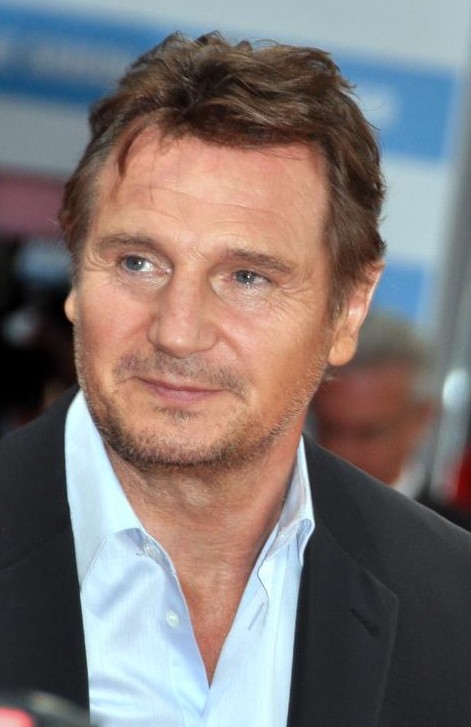


Sources & editorial notes
Reference databases
- Wikipedia
- IMDb
Information from external sources is independently selected, consolidated and edited by Arka Evren. Sources are listed for verification and further reading. Encyclopedia text is used under its licence (CC BY-SA). How we work