
FILM · 1972 · USA
The Godfather
- Directed by
- Francis Ford Coppola
- Runtime
- 175 min
- Studio
- Paramount Pictures, Alfran Productions, Albert S. Ruddy Productions
354 archived facts 8 topics 5 sources Last reviewed Sep 2026
Spanning the years 1945 to 1955, a chronicle of the fictional Italian-American Corleone crime family. When organized crime family patriarch, Vito Corleone barely survives an attempt on his life, his youngest son, Michael steps in to take care of the would-be killers, launching a campaign of bloody revenge.
Summary: TMDB

All facts (354)
- #001
Cinematographer Gordon Willis earned the nickname 'The Prince of Darkness' for lighting his sets extremely dimly. Paramount Pictures executives initially thought the footage was too dark and objected until Willis and Francis Ford Coppola convinced them it was meant to emphasize the shadowy nature of the Corleone family's business.
- #002
The cat in Marlon Brando's lap during the opening scene was a stray Coppola found at the Paramount studios and was not in the script at first. The cat was so content that its purring drowned out Brando's dialogue, forcing most of his lines to be dubbed afterward.
- #003
In an early take of the scene where Vito Corleone returns home and his men carry him up the stairs, Marlon Brando placed weights under his bed to make him harder to lift.
- #004
Note the details: most of the cars have wooden bumpers. During World War II, car owners removed their bumpers and replaced them with wooden ones, handing in the chrome versions to aid the war effort. After the war, it took several years for new ones to be fitted.
- #005
The scene in which Sonny beats Carlo (Connie's husband) was shot over four days and featured more than 700 extras. The use of the garbage can lid was improvised by James Caan.
- #006
Animal rights activists protested the horse head scene. Francis Ford Coppola told Variety: 'A lot of people were killed in that film but everyone worries about the horse. It was the same on the set. When the head arrived, it upset the animal-loving crew members who dote on little dogs. What they didn't know was that we got the head from a pet food manufacturer that slaughters two hundred horses a day.'.
- #007
To bring realism to the wedding scene (and because he had only two days for it), Francis Ford Coppola let the actors play freely and improvise in the background of the wedding scene. He then shot specific short scenes in between the action.
- #008
According to Richard S. Castellano, he defended Gordon Willis during a disagreement Willis had with Francis Ford Coppola. Coppola got his revenge by having Castellano do twenty takes of the scene in which Clemenza climbs four flights of stairs.
- #009
Gordon Willis insisted that each shot represent a point of view, usually keeping the camera about four feet off the ground to keep the angle level and even. Francis Ford Coppola had him shoot an overhead shot for the scene in which Don Vito Corleone is shot, telling Willis that this shot represented God's point of view.
- #010
Because Corleone, Sicily, was already highly developed even by the early 1970s, the scenes of Michael in exile in Italy were shot in the town of Savoca outside Taormina.
- #011
According to Francis Ford Coppola in his DVD commentary, the intercutting of the baptism scene at the film's climax with the mob murders did not really work until editor Peter Zinner added the organ music.
- #012
A fake horse's head was used for the bedroom scene during rehearsals. A real horse's head, obtained from a dog food factory, was used for the shoot. According to John Marley, his scream of terror was genuine because he had not been told a real head would be used.
- #013
In the restaurant meeting, Sollozzo speaks Sicilian to Michael so quickly that subtitles cannot be used. He begins: 'I'm sorry. What happened to your father was business. I have much respect for your father. But your father, his thinking is old-fashioned. You must understand why I had to do that. Now let's look at where we go from here.' When Michael returns from the bathroom, Sollozzo continues in Sicilian: 'Everything all right? I respect myself, understand, and cannot allow another man to hold me back. What happened was unavoidable. I had the support of the other family heads. If your father were healthier, if his oldest son weren't running things, I don't mean any disrespect, we wouldn't be having this nonsense. We'll stop fighting until your father recovers and comes back to the bargaining table. There will be no revenge. There will be peace. But your family must not interfere anymore.'.
- #014
George Lucas assembled the 'bed sequence' — a montage of crime-scene photographs and headlines about the war among the five families — in return for Francis Ford Coppola's help in financing American Graffiti (1973). Lucas asked not to be credited. He used photographs of real crime scenes. The corpse beside the chain-link fence is Frank Nitti ('The Enforcer'), Al Capone's right-hand man, who was not actually murdered but shot himself. During the scene, Coppola's father Carmine plays the piano.
- #015
Although it appears in the novel, Don Corleone's death scene was initially not going to be in the film, because studio executives thought audiences would understand what had happened when they saw the funeral. Francis Ford Coppola shot the scene with three cameras at a private residence on Long Island (a temporary garden was created from scratch and demolished immediately after filming), and Marlon Brando improvised his lines.
- #016
In the study scene where the family decides that Michael Corleone must kill Sollozzo and McCluskey, Santino Corleone is seen playing with a cane. The cane belonged to Al Pacino, who seriously injured his leg while filming Michael's escape from the restaurant.
- #017
According to Albert S. Ruddy, Marlon Brando 'loved the people on Mott Street and they loved him.' A large crowd gathered to watch the scene of the assassination attempt on Don Corleone. When he collapsed to the ground, the onlookers held their breath, then cheered wildly. Reports indicate the scene had to be reshot many times because the crowd could not control its applause for Brando's performance. When it was completed, Brando bowed to the cheering crowd.
- #018
Francis Ford Coppola shot Sonny's assassination scene in a single take with different cameras on each shot. This was because 149 squibs had been taped to James Caan's body to simulate rapid machine-gun fire, and no further take was possible.
- #019
There was a great deal of mooning on set, started by James Caan and Robert Duvall. During rehearsal of the first scene, the pair showed their backsides to Francis Ford Coppola, Marlon Brando and Salvatore Corsitto. Caan told TIME Magazine: 'The best mooning was on Second Avenue. Bob Duvall and I were in a car, Brando was in another car, we pulled up alongside, and I pulled down my pants and stuck my ass out the window. Brando collapsed in the car with laughter.' Richard Bright said it reached the point where every time you opened a door you expected to see someone's backside. Even Al Pacino got in on the act, telling Ladies' Home Journal: 'In a scene where I was sitting behind a table, the costume department made a big fuss about finding me a shirt with a smaller collar. While everyone was looking at the shirt, I took off my pants. When I came out from behind the table I burst out laughing, even though we had to reshoot the scene.' The biggest mooning came when Brando and Duvall showed their backsides to four hundred cast and crew members during filming of the wedding scene. They planned it carefully, and Caan, hearing of the plan, started shouting: 'No, no, not here!' Everyone working on the production and most of the extras dissolved into laughter (some elderly ladies did not appreciate the sight). In the end, Brando was voted best prankster with a heavyweight belt reading 'Moon Champion.'.
- #020
In the long exterior shots of Tom entering the studio grounds and of Tom and Jack Woltz walking the property, the second unit used extras in wigs and hats in order not to pay Robert Duvall and John Marley.
- #021
Michael and Kay's scenes at the opening wedding were shot at night. Because of the rushed schedule, Francis Ford Coppola had to fit their scenes in. Cinematographer Gordon Willis was very annoyed at having to set up so much light.
- #022
McCluskey's death was achieved by building a false forehead onto Sterling Hayden's head. A gap was cut in the middle and filled with fake blood, then covered with a prosthetic piece of flesh. During the shot, the plug was pulled quickly using monofilament fishing line invisible on film. The effect made a bloody hole appear suddenly in Hayden's head.
- #023
Gordon Willis had to use top lighting in Marlon Brando's scenes because of his makeup. He decided to extend this to the entire film, which is one of the reasons the film is so dark.
- #024
The film's opening scene, the three-minute zoom-out on Amerigo Bonasera and Don Corleone, was done with a computer-controlled zoom lens previously used on Silent Running (1972).
- #025
The film was shot in New York City at more than a hundred locations. Initially the entire film was to be shot on Hollywood backlots, but when production designer Dean Tavoularis threatened to add two stories to every backlot building to replicate the look of New York City, the studio backed down and allowed filming in New York.
- #026
Although Gordon Willis's dark cinematography was later copied by many films, when the developed film came back from the lab, Paramount Pictures executives thought the images were a mistake. They wanted a different look, but Willis and Francis Ford Coppola refused.
- #027
The scene between Tom and Sollozzo was shot in an abandoned restaurant. The snowstorm when they come out of the restaurant was real.
- #028
While Sonny beats Carlo, a truck in the background and a wooden crate on the sidewalk were placed strategically to hide anachronistic objects.
- #029
Although Sonny Corleone's death scene at the highway tollbooth takes place at the Jones Beach Causeway, it was shot on a small airport runway at Mitchell Field on Long Island. The scene was the most expensive to set up and shoot; the setup cost over $100,000 and it was completed in a single take with multiple camera angles. The large billboard beside the tollbooth was placed to block a modern high-rise building from appearing in the background. According to Joe Gelmis, 110 squibs and blood bags were placed on James Caan's body. In addition, more than two hundred holes packed with squibs were made in the 1941 Lincoln car to simulate the ambush attack.
- #030
The slow camera movement that opens the film, beginning on a close-up of Bonasera's face and ending behind Vito's head, takes more than two minutes to complete. It was created with a newly invented computer-timed lens that could be programmed to zoom at specific intervals. There are in fact very few zoom shots in the film, because Francis Ford Coppola and Gordon Willis avoided them for dramatic effect.
- #031
While the hospital scenes were being filmed, doctors and nurses kept sneaking in and out to see Marlon Brando.
- #032
The technicians who attached the squibs to James Caan's body said they had never attached so many squibs to anyone before. Caan replied, 'You didn't have to tell me that now.'.
- #033
While shooting a scene with Marlon Brando, Lenny Montana opened his mouth to speak and stuck out his tongue, on which was a note reading "fuck you." Brando, always open to a good joke, burst into laughter.
- #034
According to Ardell Sheridan, Mafia Captain (and future boss) Paul Castellano visited the set and spoke with Richard S. Castellano. After Paul's murder in 1985, Richard revealed to him that Paul was his uncle.
- #035
The baptism scene was shot in two churches. The interior shots were done at St. Patrick's Old Cathedral in New York City, and the exterior shots at Mount Loretto Church in Pleasant Plains, Staten Island.
- #036
While Sonny's meeting with Lucy was being filmed, Eleanor Coppola went into labor. Francis Ford Coppola went to the hospital after the scene was completed, and Sofia Coppola was born.
- #037
The meeting of the Mafia leaders was shot in the boardroom of the Penn-Central Railroad. This explains the train mural seen behind Don Barzini (Richard Conte).
- #038
While filming in Little Italy, Marlon Brando enjoyed the taste of the calamari in spicy sauce from Vincent's. In the scene where Vito bends over Sonny's body, Brando keeps a cardboard tray of this delicacy out of frame.
- #039
The opening wedding celebrations were shot over a week and used more than seven hundred and fifty extras.
- #040
According to Francis Ford Coppola, George Lucas helped him solve the lack of empty corridors in the hospital scene by using the ends of takes shot after Coppola said "Cut."
- #041
Francis Ford Coppola added the detail of people eating Chinese food out of white takeout containers, a memory from his childhood.
- #042
In the scene where Clemenza, Rocco and Paulie Gato drive through New York, stock footage from the early 1940s was used, because the production team could not recreate the main streets and skyscrapers of a past era. When the shots required by the script were found, the team only had to find a car that matched the model and copy its license plate.
- #043
The exterior shots of the Woltz mansion are actually Harold Lloyd's house. The interior scenes were shot at the Guggenheim mansion on Long Island. Guards had to be hired for the priceless artworks, and the bed was rented.
- #044
Cannoli is not mentioned in the novel or the shooting script. Francis Ford Coppola added this detail from his memories of the specific white cannoli boxes his father brought home from work.
- #045
The Christmas shopping scene with Michael and Kay required 143 extras in addition to the period cars. Street lamps were replaced with period-appropriate ones at 1,000 dollars each, and street signs were also changed. 60 crew members were present.
- #046
Twenty limousines and 150 extras were used for the Don's funeral, and the flowers cost more than 1,000 dollars each.
- #047
Because of its size, the wedding scene was shot at several locations on the same street as the house used for the exterior shots of the Corleone family compound; that house is on Longfellow Avenue, Todt Hill, Staten Island, New York. The house's low stone perimeter wall was enlarged to give the impression of a "family compound." The famous gate marking the entrance to the Corleone compound was built for the film and demolished after shooting.
- #048
It is also little known that George Lucas worked as an assistant editor on The Godfather. Lucas shot the transition images showing the progression of important points in the story, such as the headline where the Mafia families "go to the mattresses" and Don Corleone is shot. Lucas also contributed greatly to the key scene in which Michael protects his father in the hospital. When Coppola realized he did not have shots of the footsteps coming down the corridor, Lucas suggested reusing extra footage of the corridors after the actors had left the frame. Lucas helped Coppola assemble the few extra seconds of footage needed to complete the scene.
- #049
Jack Woltz's mansion was also used as Alan Stanwyk's mansion in Fletch (1985).
- #050
In the scene where Connie is beaten by Carlo, when the phone rings and Connie answers it, the voice on the other end of the line belongs to Talia Shire, who plays Connie. So she is talking to herself.
- #051
While "C'è la luna mezzo mare" is sung in the wedding scene, the camera cuts to a man with his arms around two young girls; this is Louis Prima, one of the artists who recorded the song.
- #052
The Corleone house was built as a two-story structure for the film; it included a living room, dining room, full kitchen, paneled study and an entrance hall with stairs leading up to a bedroom.
- #053
Mount Loretto Church on Staten Island, where the exterior shots of the baptism scene were filmed, burned down in 1973.
- #054
Franco Corsaro shot a scene as the dying consigliere Genco Abbandando, but the scene was cut. In the scene, which takes place after the wedding, Don Vito Corleone and his sons visit the hospital to pay their respects to Genco Abbandando, who is dying of cancer. They try to comfort him, and Genco asks Vito to stay with him as he dies. The scene appears in some television broadcasts of the film (in place of edited versions of the murder scenes) and is included in The Godfather: A Novel for Television (1977). Genco is still mentioned in the film; Santino 'Sonny' Corleone complains to Tom Hagen that he has no proper wartime consigliere.
- #055
During lunch breaks, Francis Ford Coppola was known for eating food off James Caan's plate. Caan eventually grew so tired of it that he played a prank: he made a sandwich with very hot jalapeño peppers, left it on his plate and then disappeared from the director's sight. As expected, when Coppola came to shoot the next scene, he took the sandwich from Caan's plate and ate it. Shortly afterwards tears began streaming down his face and he started shouting, 'What is this? What did you do to me?', to which Caan calmly replied, 'Did I ask you to eat off my plate? Did I?'.
- #056
According to a production assistant, between takes of the restaurant scene Sterling Hayden snacked on fruit and milk because he ate only natural foods. He read 'Dear Theo', a collection of Vincent van Gogh's letters to his brother. Then he mysteriously disappeared. He had gone for a walk, fallen asleep by the river and been woken by children throwing stones at him.
- #057
The most troublesome scenes were shot on the very narrow Mott Street, whose sidewalks were filled with merchants' goods. This was where Don Corleone came out of his olive oil factory and was shot.
- #058
Throughout the famous restaurant scene in which Michael Corleone shoots Sollozzo and Captain McCluskey, the screech of an elevated train can be heard. The sound effect was added in post-production by Francis Ford Coppola and film editor Walter Murch to heighten the tension of the scene. Unknowingly, there are real elevated train tracks directly in front of the filming location, at 3531 White Plains Road in the Bronx.
- #059
Sterling Hayden wandered away from the set between takes of the restaurant scene. He was found sleeping by a river where children threw stones at him.
- #060
Francis Ford Coppola hired production designer Dean Tavoularis, influenced by his work on Bonnie and Clyde (1967) and Little Big Man (1970).
- #061
Nino Rota composed a piece called 'The Pickup' to play during Tom Hagen's arrival in Hollywood. The studio felt the piece did not suit the scene and replaced it with a jazz standard called 'Manhattan Serenade'. Rota's original piece was included on the soundtrack album.
- #062
The hospital scenes were shot in two different locations: the exterior scenes at a side entrance of Bellevue Hospital, and the interior scenes at the New York Eye and Ear Infirmary in Manhattan, New York.
- #063
The Woltz International Pictures lot is actually the Paramount lot in Hollywood. It was not the choice of production designer Dean Tavoularis, who hated its look and had suggested the Warner Brothers lot as an alternative, but it was used for budget reasons. It was also the setting for the Paramount Pictures backlot scenes in Sunset Boulevard (1950).
- #064
In the exterior scene at the Las Vegas hotel, before Michael Corleone meets Moe Greene, Fredo Corleone, Michael, Tom Hagen and Al Neri are briefly seen getting out of a car at the hotel entrance. The man in the yellow jacket who appears to be Fredo is not actually actor John Cazale. Likewise, a stunt double is visible getting out of the car as Tom, since the man has grey hair and is clearly not Robert Duvall. For some reason, when this exterior scene was to be shot, John Cazale and Robert Duvall were unavailable, or doubles were used to cut costs. Director Francis Ford Coppola or the assistant director cleverly shot the scene by focusing on Al Pacino and avoiding frontal camera views of Fredo and Tom, preserving the illusion that the original actors appear in the scene.
- #065
Six cameras were used to shoot the wedding scenes, four of them in the garden to film cinema verite footage, along with a roaming sound recordist to capture improvised dialogue. There was also a camera on a helicopter, but most of that footage was too shaky to be used.
- #066
Aram Avakian, hired as the film's editor, was fired after falling out with Coppola.
- #067
Although Marlon Brando's voice had to be added later in the opening scene with the cat, the cat's purring can still be heard.
- #068
Jack Woltz's mansion had been used, with Robert Culp, in Death Lends a Hand (1971), a Columbo episode that aired before the film.
- #069
William Reynolds edited the first half of the film and Peter Zinner the second half.
- #070
Bill Butler worked uncredited as a cameraman on the scenes shot in Los Angeles while cinematographer Gordon Willis shot at the main locations in New York.
- #071
The film's associate producer appears as a cowboy in the scene where Tom Hagen first meets studio head Woltz.
- #072
Luana Anders, who appeared in Francis Coppola's first film Dementia 13, provided the voice of the nurse who moves Vito Corleone's bed together with Michael. It is not known why she was re-dubbed.
- #073
It is one of the 25 films on the American Film Institute's 2005 list of the 100 Years of Film Scores.
- #074
The landing scene of the Lockheed Constellation at 26:40 has the greenish sky tone of Technicolor films. The vintage cars in the distance indicate that this is archive footage. It offers a visual approach consistent with the period color tone of the film's interior scenes.
- #075
The front bumper of the 1946 Cadillac in the garage of Clemenza's house is made of wood, a detail seen on many 1946 models because of the post-war metal shortage. The novel also includes this detail when describing Clemenza's new Cadillac.
- #076
As the ambulance carrying Vito comes down the hospital ramp (~1:31), a piece of stone wall about 1.5 meters high and 4.5 meters long stands out on a ledge above the pedestrian path of the ramp. The decorative stones on it resemble the craftsmanship of the Corleone mansion at the start of the film. It is unclear whether this was an accessory hastily brought from the mansion set to hide an anachronistic feature or an original part of the hospital.
- #077
In the assassination scene at Louie's restaurant, the sound of an elevated railway is heard several times. This is the northern terminal of the Third Avenue Elevated Railway, which places the restaurant around Crotona Park in the Bronx. The line would be permanently closed within a few years.
- #078
The meeting Vito organizes after Sonny is killed was shot in the boardroom of the old New York Central Railroad. The large portrait of the man in the black coat is of William Vanderbilt, son of New York Central founder Cornelius 'Commodore' Vanderbilt. William Vanderbilt is famous for his remark to the press, 'The public be damned.'.
- #079
The Spanish dub was directed by Luis García Berlanga.
- #080
The organ music heard during the baptism and murder scenes includes excerpts and adaptations of works by J.S. Bach such as the Passacaglia and Fugue in C minor (BWV 582) and the Fantasia and Fugue in G minor (BWV 542).
- #081
The baby at the baptism is Sofia Coppola, who was born during the making of the film, on the birthday of associate editor George Lucas.
- #082
As Luca Brasi prepares to meet Bruno Tattaglia, he wears a very heavy bulletproof vest. When he is killed and the vest is delivered to the Corleones, the vest is very light, revealing that it was only a prop.
- #083
The villa in the scene where Corleone's lawyer Tom Hagen visits Mr. Woltz to get Johnny Fontane cast in his new film is the same as the Delaney house in The November Plan.
- #084
The opening scene (Bonasera) is from the point of view of Don Vito Corleone. The closing scene (the shot of Kay as the door closes) is more ambiguous, but may be from the point of view of the new Don, Michael.
- #085
Lenny Montana (Luca Brasi) was so nervous about appearing on screen with Marlon Brando that he flubbed his lines in the first take. Director Francis Ford Coppola liked this genuine nervousness and used it in the final cut. The scenes of Luca rehearsing his speech were added later.
- #086
Francis Ford Coppola held improvisational rehearsal sessions in which the main cast sat down for a family meal while staying in character. The actors could not break character, and Coppola saw this as a way for the family roles seen in the final film to form organically.
- #087
Marlon Brando wanted to make Don Corleone 'look like a bulldog' and stuffed cotton in his cheeks for the auditions. For the actual shooting he used a mouthpiece made by Dick Smith. This apparatus is displayed in a special Godfather exhibition at the Academy Museum of Motion Pictures in Los Angeles.
- #088
The slap Vito gives Johnny Fontane was not in the script. Marlon Brando improvised the slap, and Al Martino's startled reaction was genuine. According to James Caan, 'Martino didn't know whether to laugh or cry.'.
- #089
Richard S. Castellano improvised the line 'Leave the gun, take the cannoli.'.
- #090
James Caan improvised the part where he throws the FBI photographer's camera to the ground. The actor's frightened reaction was genuine. Caan also came up with the idea of throwing money at the man for breaking the camera. In his own words, 'Where I come from, if you break something, you either replace it or pay the owner.'.
- #091
According to Al Pacino, the tears in Marlon Brando's eyes during the hospital scene, as Michael pledges his loyalty to his father, were real.
- #092
Orson Welles lobbied for the role of Don Vito Corleone, even offering to lose a great deal of weight to get it. Although Francis Ford Coppola was a Welles fan, he had to turn him down because he already had Marlon Brando in mind and thought Welles was not right for the role.
- #093
Michael's speech to Apollonia's father was written in Sicilian, as in the novel. However, Al Pacino could not speak Sicilian fluently and was unable to learn such a long speech. Francis Ford Coppola rewrote the scene at the last minute so that Michael speaks in English and Fabrizio translates.
- #094
Marlon Brando did not memorize most of his lines and read from cue cards for much of the film. Brando, regarded as the father of method acting, believed that doing a cold read and using that first, unrehearsed take was the best way to get an authentic performance. There is a famous production photo from a scene with Brando, James Caan and Robert Duvall in which Duvall carries a cue card with Brando's lines written on it.
- #095
Al Pacino's maternal grandparents emigrated to America from the Sicilian town of Corleone, like Vito Corleone.
- #096
Don Vito Corleone's distinctive voice was based on the real-life mob boss Frank Costello. Marlon Brando had seen him on television during the 1951 Estes Kefauver hearings and imitated his hoarse whisper in the film.
- #097
The scene in which Enzo comes to visit Vito Corleone in the hospital was shot in reverse, with the exterior portion filmed first. Gabriele Torrei (Enzo) had never acted in front of a camera before, and his nervous trembling after the car drives away was genuine.
- #098
Francis Ford Coppola was reluctant to let his sister Talia Shire audition for the role of Connie. He found her too beautiful for the part and did not want to be accused of nepotism. Shire only got the chance to audition at Mario Puzo's request.
- #099
James Caan first heard the expression 'bada-bing!' from the real-life mob boss Carmine Persico, whom he knew, and improvised it for use in the film.
- #100
The three-year-old child actor Anthony Gounaris responded best when his real name was used during filming. That is why Michael's son is named Anthony.
- #101
The Don's wife, Carmela 'Mama' Corleone, is seen singing at the wedding. Morgana King, who played Carmela, was a talented jazz singer, and playing Carmela was in fact her film and acting debut.
- #102
Gianni Russo used his organized crime connections to get the role of Carlo Rizzi, even arranging a camera crew to shoot his own audition and sending it to the producers. However, Marlon Brando was initially against having Russo, who had never acted before, in the film. This infuriated Russo, and he went to threaten Brando. But this reckless move actually turned out to be a blessing, because Brando thought Russo was acting and became convinced he would be good for the role.
- #103
While filming the scene in which Carlo beats her, Talia Shire lost one of her shoes. Unwilling to have the set rebuilt and to wait for the camera to be reset for a second take, she kept playing the scene despite the risk of cutting her foot on the broken ceramics.
- #104
Moe Greene was modeled on the Jewish mob boss Bugsy Siegel, though Siegel was not known for wearing glasses. Both men were killed by gunshots to the eye, and the glasses Greene wears were necessary to achieve the special-effects eye shot.
- #105
To simulate the effect of having his jaw broken by Captain McCluskey, Al Pacino wore a foam latex facial appliance that covered his entire left cheek and was colored to match his skin tone to create a bruise effect.
- #106
The only comment Robert Duvall made about his performance was that he wished they had made him a better wig for his character.
- #107
Marlon Brando and James Caan both had to wear height-increasing insoles for the film.
- #108
According to Francis Ford Coppola's DVD commentary, in the scene where Captain McCluskey questions Michael in front of the hospital, the officer reluctant to arrest Michael ('It's clean, Captain. He's a war hero.') is NYPD Detective Sonny Grosso, one of the detectives famous for solving the French Connection case.
- #109
A young Sylvester Stallone auditioned for the roles of Paulie Gatto and Carlo Rizzi but was cast in neither. Stallone turned to writing instead and completed the screenplay for The Lords of Flatbush (1974), which was a modest success. He later broke through with Rocky (1976), alongside Talia Shire, who played Connie Corleone in this film.
- #110
Despite being the lead, Marlon Brando's total screen time is less than one hour.
- #111
After Al Pacino took a punch to the face as Michael, his jaw was actually wired shut during the first part of the shoot.
- #112
Mario Puzo modeled the character of Don Vito Corleone on the New York mob bosses Joe Profaci and Vito Genovese. Many events in his novel are based on real events in the lives of Profaci, Genovese and their families. Puzo based Don Vito's personality on his own mother's.
- #113
When Marlon Brando won the Best Actor Oscar for this film, he sent Sacheen Littlefeather (Marie Louise Cruz) to represent him at the awards ceremony. The presenters were Roger Moore and Liv Ullmann. When Moore held out the statuette to Littlefeather, she refused it and began her speech about the film industry's mistreatment of Native Americans.
- #114
James Caan was initially considered first for the role of Tom Hagen (he actually auditioned for it), then for Michael Corleone, but was ultimately cast as Sonny Corleone.
- #115
James Caan hung out with various shady characters to better understand the underworld lifestyle.
- #116
This was the first film for which Al Pacino was nominated for an Academy Award in the acting category four years in a row. His Best Supporting Actor nomination for this film was followed by Best Actor nominations for Serpico (1973), The Godfather Part II (1974) and Dog Day Afternoon (1975).
- #117
James Caan denied the rumor that he had come to blows with his co-star Gianni Russo on set. In 2017, Russo claimed that the physical fight between their characters escalated, with Caan allegedly taking out his real-life frustrations. 'Jimmy got a little aggressive,' Russo said in 2017. 'He improvised a few things, like that little baton he threw at me when I came down the steps. He hit me in the head, then threw me over the railing, and when I got outside he was biting my hands, he lifted me with his kicks, none of that was supposed to happen.' Russo continued, 'Jimmy and I are definitely not friends, believe me. The man is crazy.' Now Caan has clarified the fight and told THR that Russo is mistaken. 'He had a fight with somebody else. Not with me,' Caan said. 'I did the fight scene with the stuntman Paul Baxley. He came in and we made up the whole fight. And everything you see there is stuff Paul and I created the day before.'.
- #118
Frankie Avalon and Vic Damone, both experienced singers, auditioned for the role of Johnny Fontane. Francis Ford Coppola was most impressed by Damone and gave him the role, but Al Martino was chosen by the producers and used organized crime connections to keep the part. Ironically, Fontane sings 'I Have But One Heart,' Damone's first hit song.
- #119
In the 2015 documentary 'Listen To Me Marlon,' Brando's own archival recordings tell how, as a child, his mother would take out her teeth and make faces to make him laugh: a similarity can be seen in Corleone's death scene in the garden — said to be mostly improvised — as he tries to entertain his grandson.
- #120
According to Francis Ford Coppola, Marlon Brando considered Salvatore Corsitto's performance as the undertaker Bonasera the best in the film because it was the most real.
- #121
According to Alex Rocco, he initially auditioned for the role of Al Neri, but Francis Ford Coppola insisted he play Moe Greene. Rocco, who is Italian-American, thought he couldn't play someone of Jewish origin. According to Rocco, Coppola told him: 'Italians do this' and pushed his fingers upward. 'And Jews do this' with his hand extended, palm flat. It was the best directing lesson I ever got. I've been playing Jews ever since.
- #122
Martin Sheen and Dean Stockwell auditioned for the role of Michael Corleone. Oscar winner Rod Steiger campaigned hard for the role of Michael even though he was too old for it. Warren Beatty, Jack Nicholson and Dustin Hoffman were offered the role of Michael Corleone, but all declined. (Beatty was also offered directing and producing duties.) The suggestions of Alain Delon and Burt Reynolds were rejected by Francis Ford Coppola. Paramount Pictures production chief Robert Evans wanted Robert Redford cast in the role, but Coppola rejected him on the grounds that he was too WASP. Evans explained that Redford could suit the role because he could be perceived as a 'northern Italian.' Evans ultimately lost the struggle over the actor he mockingly called 'the Dwarf.' Irish-American Ryan O'Neal later emerged as a frontrunner for the role, but it finally went to James Caan. Before being cast as Michael, Al Pacino had committed to starring in The Gang That Couldn't Shoot Straight (1971). In a 2003 'Cigar Aficionado' interview, Coppola said Paramount Pictures pulled some strings and managed to get Pacino released. Paramount management, especially Evans, strongly opposed casting Pacino, who had failed his screen tests, until they saw his excellent performance in The Panic in Needle Park (1971). When Pacino came on board, Caan returned to his original role of Sonny. Robert De Niro was tested for Michael and Sonny and was nearly cast as Carlo before being cast as Paulie. Then De Niro was offered Pacino's former role in 'Gang.' With Coppola's approval, De Niro withdrew in order to take the role. This led to De Niro playing the young Vito in the sequel, which won him an Oscar and made his career.
- #123
Marlon Brando wanted Al Martino replaced because he thought his acting was wooden.
- #124
Al Lettieri, who played the Turk, was a very powerfully built man. Francis Ford Coppola said that shaking hands with him was like putting your hand in a vise.
- #125
Francis Ford Coppola cast Simonetta Stefanelli after she fled the casting room like a young girl. He summed up her role as: 'I met her, I married her, I died.'.
- #126
Abe Vigoda got the role of Tessio by responding to an open casting call, beating out hundreds of other actors.
- #127
Simonetta Stefanelli, who played Michael Corleone's first wife Apollonia, was only 16 during filming, including her topless scene. 'I had done it in another film too,' she said at the time. 'I don't much like doing it, but if the role requires it, I won't refuse.'.
- #128
According to Talia Shire, her therapist encouraged her to start asserting herself within the family, so she auditioned for the film.
- #129
James Caan credits 'insult comic' Don Rickles' stage persona as an inspiration for his characterization of Santino Corleone.
- #130
After Robert Evans insisted that James Caan be cast as Michael, Carmine Caridi was cast as Sonny. According to Evans, he told Francis Ford Coppola that he could cast Al Pacino as Michael, but only on the condition that he cast Caan as Sonny. Although Caan was Coppola's first choice, he decided Caridi was better for the role and did not want to recast Caan. Evans insisted on Caan because he wanted a 'famous' actor to play at least one of the brothers, and because Caridi, at 1.93 meters tall, would look down on Pacino on screen. Caridi was later given a small role in The Godfather Part II (1974). There is a rumor that Burt Reynolds was initially cast as Sonny Corleone, but that Marlon Brando refused to work with him because he saw him more as a television star.
- #131
Al Martino had a hard time on set. His lines were constantly rewritten because he couldn't create emotion, and most of his scenes were shot from behind.
- #132
Actor Richard S. Castellano (Clemenza) and director Francis Ford Coppola did not get along well during filming. Castellano claimed that for one sequence Coppola maliciously had him do multiple takes of Clemenza running up a staircase, a difficult task for an obese man. The heavy breathing in the take used in the print was not acting.
- #133
Diane Keaton based much of her portrayal of Kay Adams on Eleanor Coppola, the wife of Francis Ford Coppola.
- #134
The casting of Richard Conte was the idea of Martin Scorsese's mother, Catherine Scorsese, who asked Francis Ford Coppola whether he could be in the film. Catherine eventually made a cameo in The Godfather Part III (1990).
- #135
Elvis Presley was an avid fan of the book and auditioned for the role of Tom Hagen, though he really wanted to play Vito Corleone.
- #136
While talking about stealing the wedding envelope, John Martino improvised the words 'Madone' (Madonna) and 'sfortunato' (unfortunate).
- #137
Although Francis Ford Coppola wanted to portray Italians authentically, he cast many non-Italian actors in the Corleone family: Marlon Brando was of Dutch descent, James Caan was German and Jewish, and Abe Vigoda was Russian-Jewish. Still, he wanted someone who looked Sicilian to play Michael, so he fought for Al Pacino despite Paramount Pictures' strong desire to cast a 'name' such as Ryan O'Neal or Robert Redford, and despite Coppola's own acknowledgment that many Italians are blond and blue-eyed like Redford and O'Neal.
- #138
Francis Ford Coppola cast Diane Keaton as Kay Adams because of her reputation for being eccentric.
- #139
Casting was difficult, especially because of disagreements between director Coppola and studio executives. Coppola initially drew up a list of the people he wanted for five main characters - Marlon Brando (Don Corleone), Al Pacino (Michael), James Caan (Sonny), Robert Duvall (Tom Hagen) and Diane Keaton (Kay Adams). However, Paramount studio head Robert Evans and other senior executives objected to nearly every choice and launched an extensive search to find the best actors for these roles. In the end they spent more than $400,000 on casting and screen tests, but were ultimately won over by Coppola's firm stance on the people he wanted.
- #140
Although the power dynamic between their characters is one of the film's main themes, Marlon Brando and Al Pacino appear together in only four scenes and share dialogue in only two of them.
- #141
Frank Albanese, who played Uncle Pat Blundetto in The Sopranos (1999) and the smiling lawyer for young Henry Hill in GoodFellas (1990), was one of the two (machine-gun-wielding) hitmen who burst into the bedroom during the baptism scene while Michael eliminates the other Dons.
- #142
While Mrs. Corleone is being persuaded to sing, a bald man with a mustache briefly appears. This man is Michael V. Gazzo, who played Frank Pentangeli in The Godfather Part II (1974).
- #143
Richard Conte appears in only four scenes and has dialogue in only one of them: the meeting of the Dons.
- #144
Anthony Perkins auditioned for the role of Sonny Corleone.
- #145
Frank Sivero appears as an extra in the scene where Santino 'Sonny' Corleone beats Carlo Rizzi. He would later appear as young Genco Abbandando in The Godfather Part II (1974).
- #146
Olivia Hussey was considered for the role of Apollonia by casting director Fred Roos. Francis Ford Coppola actually wanted Stefania Sandrelli, but she turned down the offer.
- #147
Francis Ford Coppola invited Italian superstar singer Mina to play Kay Adams. Mina declined the offer because she was not interested in an acting career. The role eventually went to Diane Keaton.
- #148
Like the character Michael Corleone, many members of the cast and crew of 'The Godfather Trilogy' had military backgrounds, and most served in World War II: Michael V. Gazzo, G.D. Spradlin, William Bowers and Paul Lambert, along with author and screenwriter Mario Puzo, in the US Army Air Forces; Sterling Hayden served as an officer in both the Army and the Marine Corps and also worked as a covert agent for the OSS, the precursor to the CIA; Abe Vigoda, John Marley, Richard Conte, Vito Scotti, Rudy Bond, Hank Robinson, Richard Matheson and Eli Wallach in the Army; Al Martino, Harry Dean Stanton and Roger Corman in the Navy; and Harrison Ressler arranged and performed in USO shows during the war. Among those who served in the Korean War are cinematographer Gordon Willis (Air Force) and Robert Duvall, Alex Rocco, Danny Aiello, Tony Lip and Randy Jurgensen (Army).
- #149
Vic Damone was initially cast as Johnny Fontane, but left the project saying he could not portray an anti-Italian-American character. He later explained that it was because of the low pay.
- #150
Jill Clayburgh, Susan Blakely, Cybill Shepherd and Michelle Phillips screen-tested for the role of Kay. Francis Ford Coppola also considered Anne Archer, Karen Black, Geneviève Bujold, Julie Christie, Jennifer O'Neill, Ali MacGraw, Jennifer Salt and Blythe Danner.
- #151
William Devane was in the running for the role of Moe Greene.
- #152
Simonetta Stefanelli, who played Apollonia (Michael Corleone's first wife in the Sicily scenes), was only 17 years old during filming.
- #153
Alex Rocco, who played the Jewish casino owner Moe Greene, was in fact of Italian descent.
- #154
Over the course of the film series, Michael Corleone kills only two people: Captain McClusky and Sollozzo. It is also the first time Michael kills anyone.
- #155
Several of the film's lead and supporting actors appeared in various episodes of the popular gangster series The Untouchables (1959): Robert Duvall, James Caan, John Marley, Al Lettieri, Richard Conte, Rudy Bond, Paul Lambert and others.
- #156
Francis Ford Coppola wanted Timothy Carey for the role of Luca Brasi, but Carey turned down the offer in order to shoot a television pilot.
- #157
David Carradine and Dean Stockwell screen-tested for the role of Michael Corleone.
- #158
Francis Ford Coppola first offered the role of Don Vito Corleone to the retired Maltese actor Joseph Calleia, but Calleia declined the offer due to health problems.
- #159
Al Pacino revealed that Paramount Pictures initially rejected him for the role of Michael Corleone, preferring bigger names such as Jack Nicholson, Robert Redford, Warren Beatty and Ryan O'Neal. Although director Francis Ford Coppola was under pressure from the studio, he fought to cast Pacino despite his lack of star power. "Paramount didn't want me to play Michael Corleone," Pacino wrote. "They wanted Jack Nicholson. They wanted Robert Redford. They wanted Warren Beatty or Ryan O'Neal." After shooting the wedding scene with Diane Keaton, Pacino became convinced the film was a disaster. He recalls returning to Manhattan and getting drunk with Keaton, both believing their careers were over. "Based on that one shot, we were sure it was the worst film ever made," Pacino wrote. "We thought our careers were over." His performance in the now-iconic restaurant assassination scene, in which Michael kills Sollozzo and McCluskey, changed everything. Coppola showed the footage to Paramount executives, which convinced them to keep Pacino in the film. "It was because of my performance in that scene that they kept me in the film. So I wasn't fired from The Godfather." Pacino also recounts a surreal lunch with Marlon Brando: Brando ate chicken cacciatore with his bare hands and smeared red sauce on a hospital bed. Despite the chaos, Brando gave Pacino a reassuring moment: "Marlon looked at me with those soft eyes and said, 'Yeah kid, you're gonna be all right.'".
- #160
Peter Donat, Martin Sheen, Roy Thinnes, Barry Primus, Robert Vaughn, Richard Mulligan, Keir Dullea, Dean Stockwell, Jack Nicholson and James Caan were considered for the role of Tom Hagen. John Cassavetes and Peter Falk also wanted the role. Of these actors, only Donat appeared in The Godfather Part II (1974), in the role of Questadt.
- #161
Luca Brasi is loosely inspired by Willie Moretti (1894-1951). Moretti was the underboss of the Genovese crime family and was known as both a cousin and right-hand man of Frank Costello. He was said to be the real "power" behind Costello's regime. Moretti was assassinated in 1951. His mental state had deteriorated due to advanced syphilis, and the entire Mafia commission feared he was unwittingly leaking information to political authorities and the press.
- #162
As a child, Al Pacino was called "Sonny" by his friends, just like his fictional brother Santino "Sonny" Corleone.
- #163
Salvatore Corsitto was hired from an open casting call.
- #164
In his memoirs, Al Pacino wrote that the cast and crew expected to be fired from the film because his performance was not deemed "good enough" by the studio. After watching the footage with Francis Ford Coppola, Pacino admitted he did not trust his own talent. However, after executives were impressed by his performance in the scene in which Michael kills Sollozzo and McCluskey, they decided to keep Pacino.
- #165
Frank Puglia was originally cast as Bonasera, but had to withdraw due to illness.
- #166
Although James Caan auditioned for the roles of Michael, Sonny and Hagen in The Godfather and received extensive coaching, no one except director Coppola found him successful in any of these roles.
- #167
Franco Nero met with Francis Ford Coppola in London for the role of Sollozzo.
- #168
Peter Clemenza is largely based on Frank LaBruzzo, a former leader of the Bonanno crime family and the brother-in-law of Joseph Bonanno. Joseph Bonanno mysteriously disappeared in October 1964 after allegedly being kidnapped at gunpoint from his lawyer's apartment. In his absence, the Bonanno family fell into a four-year internal conflict between two rival leaders. LaBruzzo remained loyal to the missing Joseph's old regime and tried to support the efforts of his young nephew Salvatore Bonnano to become the new leader.
- #169
Charlie Bluhdorn, president of Paramount's parent company Gulf and Western, wanted Charles Bronson for the role of Don Vito Corleone.
- #170
Rudy Vallee badly wanted the role of Tom Hagen but was considered too old.
- #171
Aldo Ray was considered for the role of Sonny Corleone.
- #172
Although Rudy Bond is officially listed as playing Cuneo in the film, he was in fact playing one of the other Dons seen at the meeting.
- #173
Gianni Russo, Morgana King, Salvatore Corsitto, Tere Livrano, Jeannie Linero and Ardell Sheridan made their acting debuts in the film. John Martino, Abe Vigoda, John Cazale, Al Martino, Lenny Montana, Tony Giorgio and Victor Rendina, who had previously appeared as extras in television and/or films, received their first feature film credits.
- #174
Al Pacino, Richard Castellano and Morgana King (born Maria Grazia Morgana Messina) were second-generation Sicilian Americans.
- #175
Richard S. Castellano (Clemenza) declined to comment on rumors that he had ties to organized crime. After the actor's death, however, his widow wrote in a book that he was the nephew of Paul Castellano, the head of the Gambino crime family who was assassinated in 1985 outside Sparks Steak House in Midtown. John Gotti arranged the murder and became the new head of the Gambinos. The actor's sister rejected the claim of a family connection, saying, "We are not related to Paul."
- #176
Morgana King, who played the family matriarch, was born in 1930, meaning she was only ten years older than her biological sons on screen (Al Pacino and James Caan) and only one year older than her adopted son (Robert Duvall).
- #177
As of Robert Duvall's death on February 15, 2026, Al Pacino, Talia Shire, Gianni Russo, John Martino and Simonetta Stefanelli are the only surviving cast members.
- #178
James Caan died 18 years and 4 days after Marlon Brando.
- #179
The actor who played Don Zaluchi (Louis Guss), the mafia boss who advocated limiting drug distribution, would later become best known as Loretta Castorini's (Cher) highly romantic uncle in Moonstruck (1987).
- #180
Morgana King was also a singer who mostly performed jazz songs. In 1964 she was nominated for the Best New Artist Grammy but lost to The Beatles.
- #181
Ernest Borgnine, George C. Scott, Richard Conte, Raf Vallone, Anthony Quinn and Carlo Ponti were considered for the role of Don Vito Corleone. Conte was ultimately cast as Don Emilio Barzini.
- #182
On-screen siblings Al Pacino and Talia Shire share the same birthday, April 25.
- #183
Despite being 15 years apart, Diane Keaton and Robert Duvall shared the same birthday: January 5. They died only months apart.
- #184
Francis Ford Coppola insisted the film be titled not simply "The Godfather" but "Mario Puzo's The Godfather," because the first draft of the screenplay was so faithful to the novel that he felt Puzo deserved credit for it.
- #185
According to interviews in the Coppola Restoration DVD set, the film was initially planned to be shown with an intermission because of its three-hour length. The intermission would have come right after Michael kills Sollozzo and McCluskey. This explains the operatic instrumental piece that begins with Michael's escape from the restaurant and the "newspaper" montage that follows, which would have been the first scene after the intermission.
- #186
Francis Ford Coppola delivered a director's cut running two hours and six minutes. Paramount Pictures production chief Robert Evans rejected that version and demanded a longer cut with more scenes involving the family. The final released version was nearly fifty minutes longer than Coppola's first cut.
- #187
According to Francis Ford Coppola, the film was shot in 62 days: March 23 to May 24, 1971.
- #188
Early word about the film was so positive that a sequel was planned before the film was even finished.
- #189
For the scene in which Clemenza cooks, Francis Ford Coppola wrote "Clemenza fries some sausage" in the script. Seeing this, Mario Puzo crossed out the word "fries" and replaced it with "broils," adding in the margin, "gangsters don't fry."
- #190
Sergio Leone was offered the directing job but turned it down because he did not find the story, which glorified the Mafia, interesting enough. He later regretted declining the offer, but went on to direct his own critically acclaimed gangster film, Once Upon a Time in America (1984).
- #191
Francis Ford Coppola initially planned to open the film with the wedding scene and introduce all the characters right away. Then a friend pointed out how interestingly the opening scene of Patton (1970) had been written. Coppola consequently rewrote the opening as the Bonasera scene.
- #192
James Caan was angry that scenes giving Sonny more depth (such as his reaction to his father being shot) were cut from the film. At the premiere he confronted Robert Evans and shouted, "Hey, you cut my whole goddamn part." Caan claimed forty-five minutes of his character were cut.
- #193
Al Pacino, James Caan and Diane Keaton each received $35,000 for their work on the film.
- #194
One of the reasons Francis Ford Coppola agreed to direct the film was that he owed Warner Brothers money because of the $400,000 budget overrun on George Lucas's 'THX 1138' (1971). Lucas pressured him to take the job.
- #195
Francis Ford Coppola worked with his relatives on this film (which in many respects made it a family film). In chronological order: his sister Talia Shire played Connie Corleone throughout the entire series; his mother Italia Coppola appeared as an extra in the restaurant meeting; his father Carmine Coppola played piano in the bedroom scene and composed the music; his sons Gian-Carlo Coppola and Roman Coppola can be seen as extras in the scene where Sonny beats Carlo and at the funeral; and his daughter Sofia Coppola played the baby Michael Rizzi in the baptism scene (she was three weeks old during filming).
- #196
In 1974 the film aired on NBC over two nights: Saturday, November 16 and Monday, November 18, from 21:00 to 23:00. On both nights at 23:00, the New York City water department experienced overflow problems caused by all the toilets being flushed at the same time.
- #197
Mafia leader Joseph Colombo and his organization, the Italian-American Civil Rights League, launched a campaign to halt the film's production. In his autobiography, Robert Evans said Colombo called his home and threatened him and his family. Before production, Paramount Pictures received many letters from Italian-Americans (including politicians) stating that the film was anti-Italian. They threatened protests and to obstruct filming. Producer Albert S. Ruddy met with Colombo, and Colombo demanded that the terms 'Mafia' and 'Cosa Nostra' not be used in the film. Ruddy gave him the right to review the script and make changes. He also agreed to hire League members (mobsters) as extras and consultants. After this agreement, the angry letters stopped. Paramount Pictures owner Charlie Bluhdorn read about the deal in the New York Times and was so furious that he fired Ruddy and shut down production, but Evans convinced Bluhdorn that the deal was beneficial for the film, and Ruddy was rehired.
- #198
Paramount executive Peter Bart bought the film rights to Mario Puzo's 'The Godfather' before the novel was even finished. The novel was still only a 20-page draft. Mario Puzo's 'The Godfather' was published in 1969. Filming began in March 1971.
- #199
When Paramount Pictures' top management was unhappy with the first footage, it considered replacing Francis Ford Coppola with Elia Kazan; its hope was that Kazan could work with the difficult Marlon Brando. Brando announced that he would leave the film if Coppola was fired, and the studio backed down. Paramount management was unaware of Brando's anger toward Kazan over Kazan's 1950s testimony before the House Un-American Activities Committee.
- #200
Paramount Pictures' original idea was to make the film as a low-budget gangster film set in the present day rather than a period film set in the 1940s and 1950s. Francis Ford Coppola rejected Mario Puzo's original screenplay based on that idea.
- #201
Composer Nino Rota won the Golden Globe, BAFTA and Grammy awards for Best Original Music even though his Oscar nomination was withdrawn when it emerged that he had used the same theme in his earlier film Fortunella (1958). Interestingly, Rota won the Best Original Score Oscar with the sequel The Godfather Part II (1974), even though he used the same love theme in that film as well.
- #202
Francis Ford Coppola did not much like the horse's head scene in the novel, but he acknowledged that it was too iconic to be cut.
- #203
At the 45th anniversary reunion in 2017, Al Pacino recalled that he made Diane Keaton laugh while describing how both of them were caught up in 'chaos' during the filming of the wedding scene and thought the film would not turn out well: 'We started drinking and we were saying, where are we going with this? We're finished. This is the worst film ever made.'.
- #204
The scene in which Michael visits his father in the hospital was planned to be Marlon Brando's first scene. However, Brando missed his flight and arrived on set at 2 p.m., too late to shoot a scene whose facial makeup preparation alone took two to three hours. According to Robert Evans, when Paramount Pictures sent Brando a $12,000 check to dub the film, Brando called to say they had overpaid him by $4,000 because of the day he missed and asked where to return the money.
- #205
During filming, Francis Ford Coppola complained about the station wagon he had been given and made a bet with Robert Evans: if the film grossed $50 million, Paramount Pictures would buy him a new car. As the grosses rose, Coppola and George Lucas went car shopping and bought a Mercedes Benz 600 stretch limousine, asking that the bill be sent to Paramount Pictures. The car appears in the opening scene of 'American Graffiti' (1973).
- #206
According to Albert S. Ruddy's assistant Bettye McCartt, Ruddy was warned by police that he was being followed by the Mafia's car. Ruddy would switch cars with McCartt to lose them. One night McCartt found her car windows smashed and a note reading 'Shut down the film or else...'.
- #207
According to the documentary The Godfather Family: A Look Inside (1990), Al Pacino was nearly fired midway through filming. At that point Paramount Pictures executives had only seen Michael's first scenes at the wedding and were shouting, 'When is he going to do something?' When they finally saw the scene in which Michael shoots Sollozzo and McCluskey in the restaurant, they changed their minds and Pacino kept his job.
- #208
Francis Ford Coppola had a theater background and used it to prepare the screenplay. Taking pages from the book and pasting them into a notebook, he created enough space to write detailed notes about the scenes he wanted to use, what he needed to do to make them work, and the pitfalls he needed to avoid. (One example: 'Italians talk like this.').
- #209
Before production, Francis Ford Coppola shot his own informal screen tests with Al Pacino, James Caan, Robert Duvall and Diane Keaton at his home in San Francisco. Robert Evans was not impressed by them and insisted on official screen tests. The studio spent four hundred twenty thousand dollars on screen tests, but in the end the actors Coppola had originally wanted were hired.
- #210
Before the film went into production, Paramount Pictures was going through an unsuccessful period. Its most recent Mafia-themed film, The Brotherhood (1968), had failed at the box office. The studio had also gone over budget on its recent films Darling Lili (1970), Paint Your Wagon (1969) and Waterloo (1970). The film's budget was initially two and a half million dollars, but as the book's popularity grew and Coppola argued for a larger budget, it was raised to six million dollars.
- #211
The studio initially wanted to drop the iconic 'puppet strings' logo created by graphic designer S. Neil Fujita for the novel's publication and to remove Mario Puzo's name above the title, but Francis Ford Coppola insisted the logo stay, since Puzo had written the screenplay with him.
- #212
Paramount Pictures wanted the film to appeal to a wide audience and threatened Francis Ford Coppola with a 'violence coach' to make the film more exciting. Coppola added several more violent scenes to please the studio. The scene in which Connie smashes plates after learning that Carlo cheated on her was added for this reason.
- #213
After Marlon Brando's death, his own annotated screenplay for the film sold at an auction in New York for $12,800, the highest amount ever paid for a film screenplay.
- #214
Mario Puzo was proud of the line in the novel 'A lawyer with his briefcase can steal more than a hundred men with guns.' He insisted it be used in the film, but Marlon Brando thought it was too didactic and the line was cut.
- #215
Al Pacino was paid only $35,000 to appear in the film (the same as James Caan and Diane Keaton, and $1,000 less than Robert Duvall). However, after the highly successful Serpico (1973), Pacino managed to secure a $600,000 salary for The Godfather Part II (1974) plus a 10% share of the film's adjusted gross.
- #216
Francis Ford Coppola was initially against directing the film because he thought it glorified the Mafia and violence and would reflect badly on his Italian-Sicilian heritage. However, once he thought of the film as an allegory of American capitalism, he accepted the job enthusiastically.
- #217
In his 1994 autobiography 'Songs My Mother Taught Me,' Marlon Brando said he turned down the film repeatedly because he did not want to glorify the Mafia.
- #218
Robert Evans had watched the gangster films Paramount Pictures released before he came to the studio (including The Brotherhood (1968)). He noticed that most of them had failed and that they had not been written and directed by Italian-Americans, and he said he hired Francis Ford Coppola partly to 'smell the spaghetti.'.
- #219
Production began on March 23, 1971, but Marlon Brando worked only thirty-five days, between April 12 and May 28, so that he could fulfill his commitment to 'Last Tango in Paris' (1972).
- #220
One of Marlon Brando's first scenes was his meeting with Sollozzo in his office. Paramount Pictures executives were not impressed by his acting in the scene and complained to Francis Ford Coppola. However, when asked whether they wanted to reshoot the scene, they refused. Coppola feared he would be fired, but he also knew he would not be fired before the weekend. Since it was Wednesday, he thought he had time to recover. He identified fourteen crew members he thought might be reporting on him to the studio (including his first assistant director and first editor, Aram Avakian — Robert Duvall confirmed this) and fired them. He reshot the scene with new crew members.
- #221
This was Richard Conte's last American studio film before his death on April 15, 1975, at the age of 65.
- #222
Mario Puzo gave Vito's eldest son the nickname 'Sonny,' inspired by the nickname given to Al Capone's son. The similarities end there. Sonny Capone did not go into his father's business.
- #223
Robert Duvall was paid $36,000 for eight weeks of work.
- #224
The character of Hollywood mogul Jack Woltz was inspired by Warner Brothers president Jack L. Warner. His personality was based on MGM president Louis B. Mayer, a great racing enthusiast who owned a racing stable. Mayer gave up the activity after his son-in-law William Goetz (his partner in the stable), was accused of colluding with the Mafia to fix a race. Mayer's horse was the favorite.
- #225
Francis Ford Coppola based many characters, in addition to Mario Puzo's novel, on his own family members.
- #226
At one point during shooting, Robert Evans felt the film had too little action and considered hiring an action director to finish the job. To please Evans, Francis Ford Coppola and his son Gian-Carlo Coppola developed the long fight scene between Connie and Carlo. As a result, Evans was satisfied enough to let Coppola finish the film.
- #227
The attempt on Vito's life was initially planned as a flashback. Michael and Kay would see the news of the shooting in the newspaper, which would lead into the event.
- #228
In the novel, Bonasera (Salvatore Corsitto) was the last person allowed to see Don Corleone (Marlon Brando), while the baker Nazorine (Vito Scotti) was the first. Making Bonasera first in the film was intended to show that Nazorine's way of asking for a favor was more appropriate and to imply that Nazorine had heard of Bonasera's disrespect.
- #229
In April 1972, Paramount Pictures placed the following advertisement in trade publications: 'Within less than four weeks of national distribution, The Godfather is the twelfth highest-grossing film of all time domestically. No motion picture has ever grossed so much in so short a time.'.
- #230
The film was shot in seventy-seven days, six days less than the original eighty-three-day schedule.
- #231
In 1990, the film was selected by the National Film Archive and the Library of Congress.
- #232
According to an August 1971 article by Nicholas Pileggi in The New York Times, Paramount Pictures planned to release a line of spaghetti sauce bearing the 'The Godfather' logo to promote the film. Godfather restaurant chains selling pizza, sandwiches, Italian ice cream, Italian bread and pastries were also planned. A spin-off series was planned as well, but none of these ideas materialized.
- #233
The explanation of the Sicilian tradition that a father refuses no request on his daughter's wedding day was actually given by Michael to Kay. It could be said that this made more sense than Tom Hagen explaining it to his own Sicilian wife.
- #234
In the novel, when Johnny tells the Don his situation, he explains plainly why Woltz dislikes him. Francis Ford Coppola changed this, preferring the explanation to come from Woltz's fit of rage.
- #235
While writing the novel, Mario Puzo took ideas directly or indirectly from real Mafia stories. He borrowed heavily in particular from the life of New York gangster 'Crazy' Joe Gallo and his dynamics with his brothers. In the film, Sonny is 'hot-headed' (like Crazy Joe), Michael is thoughtful and intelligent (like Larry Gallo) and Fredo is dim-witted (like Michael Gallo). Terms such as 'sleeping with the fishes' and 'hitting the mattresses' also come from the Gallos' lives. One associate of the Gallos was killed while out fishing with friends, and the Gallos were sent a fish in a box, just as Sonny receives Luca Brasi's bulletproof vest with a fish. When the Gallos rebelled against their boss Joe Profaci, they went to war and rented apartments filled with mattresses. In real life, after seeing the film, Joe Gallo considered suing Mario Puzo and Paramount Pictures for stealing details of his life. This did not happen, however, because 'Crazy' Joe Gallo was killed on April 7, 1972, nearly a month after the film's New York premiere.
- #236
In a moment of life imitating art, mob boss Johnny Camino threatened Paramount's CEO, and this is how Gianni Russo got a role in The Godfather.
- #237
Robert Evans hated Nino Rota's first attempt at the music. Francis Ford Coppola therefore threatened to resign until Evans backed down.
- #238
According to an interview with Cigar Aficionado magazine, Francis Ford Coppola held a meeting at his home in 1969 with producers Albert S. Ruddy and Gray Frederickson to discuss The Conversation (1974). He had sent the script to Marlon Brando, and Brando called during the meeting to politely decline. Just before the meeting, Coppola had noticed a newspaper advertisement for an upcoming novel by Mario Puzo titled 'The Godfather'. Only a few months later, five people would come together to discuss the film adaptation of the novel.
- #239
In the original novel, the section in which Don Corleone grants people's requests on his daughter's wedding day is longer, and more people ask for favors. Interestingly, one of those asking the Don for money to run a pizza restaurant has the surname Coppola.
- #240
Robert Evans related that Puzo owed the Mafia about $10,000 and had written the beginning of a novel titled 'Mafia'. Evans optioned the novel for the amount Puzo owed the Mafia.
- #241
The famous opening scene was modeled on a real Mafia wedding held on August 18, 1956 at the Hotel Astor in New York: the marriage of Salvatore 'Bill' Bonanno, son of mob boss Joseph Bonanno, to Rosalie Profaci, niece of mob boss Joseph Profaci. It was intended to strengthen the alliance between the two families. All the major mob bosses and their associates attended the wedding, and singer Tony Bennett performed for more than 3,000 guests.
- #242
The screenplays for Patton (1970) and The Godfather (1972) were adapted by Francis Ford Coppola. Both films won the Academy Award for Best Actor, for George C. Scott and Marlon Brando respectively, and both actors refused the award for different reasons.
- #243
Screenwriter Robert Towne wrote the veranda scene between Don Corleone and his son Michael.
- #244
Adjusted for inflation, The Godfather is the second highest-grossing R-rated film at the domestic box office, behind The Exorcist (1973).
- #245
It was the highest-grossing film ever to win the Academy Award for Best Picture, a title it held until Rain Man (1988) surpassed it.
- #246
Producer Albert S. Ruddy later said, "It was the most miserable film you could imagine making. Nobody enjoyed even one day of it."
- #247
It is one of only five films to have held the number 1 spot on the IMDb Top 250; the other four are Star Wars: Episode IV - A New Hope (1977), The Shawshank Redemption (1994), The Lord of the Rings: The Fellowship of the Ring (2001) and The Dark Knight (2008).
- #248
The Godfather's record-breaking box-office success meant that the Mafia's initial problems ceased to be an issue by the time the sequel The Godfather Part II was released in 1974. Ruddy did not make the sequel, and the words "Mafia" and "Cosa Nostra" were used in The Godfather Part II in the scenes where Michael Corleone (Al Pacino) faces a Senate hearing, but this fact caused no trouble with the real Mafia. As for Joe Colombo, he was shot at a rally in 1971 and therefore never saw The Godfather. Colombo was paralyzed as a result of the assassination attempt and died seven years later.
- #249
In the novel and the screenplay, Sonny's death was a flashback. Sonny drives toward the toll booth, then Tom calls Bonasera to restore the Don's favor, and then the assassination takes place.
- #250
Al Pacino admitted he preferred this film to The Godfather Part II (1974): "You see, The Godfather is more fun. Godfather II is a study, a personal thing for Francis. Godfather I... in a scene there are always two or three things going on. You're inside the story, you're flowing. You don't know what's coming next, that's storytelling, really storytelling at its best. Godfather II is more linear and different, gloomy, slow-moving. But it's a great film, I have to say."
- #251
It was Robert Evans who put Francis Ford Coppola in the director's chair. After Peter Bogdanovich and several other directors turned down the offer, Evans gave Coppola his chance.
- #252
Mario Puzo explained his decision to write the novel: "As Lenny Bruce once advised, it was time to grow up and sell out."
- #253
When Paramount Pictures offered Otto Preminger the directing job, Preminger wanted Frank Sinatra for the role of Don Corleone.
- #254
The film was initially seen as a low-budget, and therefore low-risk, rather unappealing project. Figures such as Arthur Penn, Peter Yates, Otto Preminger, Fred Zinnemann and Elia Kazan turned down the offer.
- #255
The Godfather remained among the top ten highest-grossing films worldwide for more than a decade, until Star Wars: Episode VI - Return of the Jedi pushed it off the list in 1983.
- #256
George Lucas persuaded Francis Ford Coppola to accept the directing job he had initially turned down. Coppola recounts: "He said, 'We can't refuse, we have no money, the sheriff will put a chain on our door because we haven't paid taxes. You have to do this, we have no choice.' And I said, 'You're right, George.'".
- #257
The Godfather became the first Hollywood film series to be turned into a trilogy. Star Wars (1977) comes second.
- #258
The film was screened for President Richard Nixon at Camp David.
- #259
The Godfather's producer Al Ruddy received threats from the Mafia if he did not hire mob members as extras. The producer later admitted he preferred dealing with the Mafia over Hollywood bosses.
- #260
The film appears on Letterboxd's Official Top 250 Narrative Feature Films list.
- #261
An MGM boss received threats from the Mafia if its contract player Al Pacino was not allowed to appear in Paramount's The Godfather. Sidney Korshak, a Mafia member and friend of Paramount producer Robert Evans, met with the MGM boss in person.
- #262
The Godfather is the highest-rated film of the 1970s on the Internet Movie Database and, as of March 2026, ranks 2nd on its Top 250 list.
- #263
It is one of only six films to have risen to number 1 on Letterboxd's Official Top 250 Narrative Feature Films list. The others are Harakiri (1962), Come and See (1985), Parasite (2019), Everything Everywhere All at Once (2022) and Spider-Man: Across the Spider-Verse (2023).
- #264
It is Francis Ford Coppola's highest-grossing film and his only film to gross over $100 million domestically.
- #265
Costa-Gavras declined the offer to direct the film. He was also considered for The Godfather Part III (1990) until Francis Ford Coppola agreed to return.
- #266
Stanley Kubrick thought the film had the best cast ever assembled and might be the best film ever made.
- #267
In most of the Sicily scenes, Michael wipes his nose with a handkerchief. The novel explains that McCluskey's punch damaged his sinuses.
- #268
In the famous horse-head scene, an Oscar statuette can be seen on Jack Woltz's nightstand. That Oscar had been given to Francis Ford Coppola for writing Patton (1970).
- #269
Radio host Howard Stern has said he would gladly welcome any actor from this film as a guest and that they could show up at his studio unannounced. Over the years, actors such as Robert Duvall and James Caan were pre-arranged guests, but the "come and walk in" policy was never actually used until Gianni Russo showed up one day. Even though Stern was busy with other guests, he had him brought into the studio immediately and interviewed him.
- #270
The film begins and ends in the Don's study. At the start, Vito is the Don and Michael tells Kay the truth about his family's business and that he does not want to be part of it. At the end, Michael is the Don and lies to Kay about his role in Carlo's death.
- #271
The immortal line "I'm gonna make him an offer he can't refuse" appears in some form in every Godfather film.
- #272
Every wedding guest who asks Vito Corleone for a favor is later called upon in the film to repay it. The baker Nazorine asks for help so that Enzo can stay in America and marry his daughter. Enzo later arrives at the hospital first with flowers and then helps Michael fend off the attempt on McCluskey's life. Johnny Fontane agrees to appear at Michael's casinos in exchange for a film role that revives his career. Bonasera, who comes to avenge the attempted rape and beating of his daughter, is called upon to prepare Sonny's body for the funeral.
- #273
The film uses several Italian words: Paulie says "sfortunato," meaning "unlucky man." Michael explains that Tom is a "consigliere," or adviser. Vito calls Johnny Fontane a "finocchio," a derogatory term for homosexuals. Sonny calls Paulie a "stronzo," meaning "turd." Carlo and Connie say "vaffanculo," meaning "go fuck yourself," during their fights. Don Zaluchi says that selling drugs to children is an "infamia," a disgrace. Both Don Corleones use the phrase "pezzo novanta," which means ".90 caliber" or, more precisely, is an idiom for a "big shot."
- #274
The traditional Sicilian hat, such as the one worn by Michael's bodyguards, is called a "coppola."
- #275
Oranges or the color orange foreshadow death. Clemenza asks for more wine and Paulie gives him a pitcher of wine with oranges floating in it; Paulie is later killed. Tessio reaches across the table for an orange, foreshadowing not only his own death but also his betrayal of the Corleones. Oranges sit on the table between Tom Hagen and Jack Woltz. Vito Corleone is buying oranges when he is shot. Carlo is wearing an orange jumpsuit when Sonny beats him, foreshadowing the deaths of both men. At the meeting with the other Dons, an orange is placed in front of each Don whom Michael later has killed. Vito has an orange peel in his mouth when he suffers his fatal heart attack.
- #276
Michael Corleone (Al Pacino) and Kay Adams (Diane Keaton) go to see The Bells of St. Mary's (1945). A sequel to Going My Way (1944), it was the first sequel ever nominated for Best Picture. The second was The Godfather Part II (1974).
- #277
George Lucas, Francis Ford Coppola's partner and a co-editor of this film, acknowledges that he paid homage to The Godfather with two scenes in the Star Wars series. First, Luca Brasi's death by strangulation inspired Princess Leia strangling Jabba the Hutt. Second, the baptism scene, in which Michael's vows are intercut with the murders of the rival Dons, inspired the scene in which Darth Vader kills the Separatist leaders while Palpatine announces the founding of his Empire. The baby in the original scene is Sofia Coppola, who also appeared as a handmaiden in Star Wars: Episode I - The Phantom Menace (1999) and directed Hayden Christensen in The Virgin Suicides (1999).
- #278
Sonny's death scene offers a clue that Carlo set him up. When Sonny beat Carlo, he finished by kicking him in the face. After Sonny is shot dead, one of his killers kicks him in the face.
- #279
In the novel, it is revealed that Apollonia was one month pregnant when she was killed.
- #280
At Connie's wedding, Sonny is seen in close proximity to the maid of honor, Lucy Mancini (Jeannie Linero), who wears a pink dress. According to the novel, Sonny takes Lucy as his mistress (she is "that young girl" Don Corleone mentions to Sonny; Sonny is also seen before he visits Connie). The novel and the film trilogy differ on her fate. In the film she eventually moves on and marries a doctor from Las Vegas. She appears briefly in The Godfather Part III (1990), and her son Vincent plays a significant role.
- #281
The town square in Sicily has a central place in all three films. In The Godfather, Michael passes through it when he is "exiled" to Sicily. In The Godfather Part II, Vito is in front of the square as he is smuggled out of Sicily by car. In The Godfather Part III, Michael and his family are in front of the square when they visit Sicily to watch Anthony's performance.
- #282
For many years, Marlon Brando and Robert De Niro were the only two actors to win separate Oscars for playing the same character. Brando won Best Actor for The Godfather (1972) and De Niro won Best Supporting Actor for The Godfather Part II (1974), both for the role of Vito Corleone. (Coincidentally, neither attended the ceremony to collect the award.) Decades later, Heath Ledger and Joaquin Phoenix won Oscars for playing two different versions of the same character in two separate films. Ledger won Best Supporting Actor for playing the Joker in The Dark Knight (2008), and Phoenix won Best Actor for playing the Joker in Joker (2019).
- #283
While Michael and Apollonia are on their walk, they are followed by a group of older women. This group joke is reinforced by the sound of goat bells.
- #284
In a short scene after Michael and Apollonia are formally introduced, they walk in the countryside, Apollonia stumbles and Michael takes her arm to steady her. The older women following them exchange meaningful glances and laugh. The scene ends without context, but in the book it is revealed that Apollonia — a girl with a nimble, firm step — deliberately stumbled so that her future husband could touch her, an act strictly forbidden before marriage. The other women understand the trick and laugh at her cunning.
- #285
Vito refuses to enter the narcotics business after the war because he not only knows his political friends would abandon him but also believes the drug trade could eventually kill the Mafia. In real life, the Mafia has been largely crippled since the 1970s because the fight against drugs drew federal attention to mob activities.
- #286
Sonny's death scene was inspired by the ending of Bonnie and Clyde (1967).
- #287
In the novel, Don Cuneo's first name is Ottileo, but in the film he is known as Carmine Cuneo, a tribute to Carmine Coppola.
- #288
In the novel and the sequel/prequel film, the Black Hand existed in America in the early 20th century before the Cosa Nostra. In Italian-American communities in large cities, the Black Hand was not a gang but a method of extortion, usually practiced by freelance criminals against prominent Italian-Americans. Vito Corleone (after killing the neighborhood extortionist Don Fanucci) became a Black Hander, though he was less predatory than his predecessor. This was before the formation of the Cosa Nostra "crime families" that came decades later.
- #289
Before the meeting and the car ride to "New Jersey," the group meets in front of a restaurant called Dempsey's Manassa Restaurant. Jack Dempsey, nicknamed the "Manassa Mauler," was born in Manassa, Colorado, and gave the town's name and part of his nickname to the restaurant.
- #290
Real money appears in only one shot in the film, when Sonny throws dollars at a photographer after breaking his camera at his sister Connie's wedding. This is believed to have been done to show the secrecy and privacy within the Corleone family, unlike other mob films. See also The Godfather Part II.
- #291
The Corleone mansion is apparently located in Long Beach, a small but then increasingly affluent seaside community on a barrier island on the south shore of Long Island. It is worth noting that during Prohibition, Long Beach had a notorious reputation for rum-running operations, an illegal enterprise that gave organized crime in the US a major and lasting boost.
- #292
The scene in which the mob bosses agree not to sell drugs in their own neighborhoods is partly responsible for the widespread misconception that the American Mafia did not enter the drug trade until the mid-20th century and later, and that it had moral reservations about it. There is some truth to this, but men such as Vito Genovese and Lucky Luciano were involved in heroin distribution as early as the 1930s and had no reservations about where or to whom it was sold. Luciano himself had been jailed for selling heroin as early as 1916. The two men were responsible for taking the heroin trade international, and Genovese was later convicted of drug trafficking in 1959.
- #293
Michael Corleone constantly drinks water throughout the first two films, implying that he is diabetic. He later falls into a diabetic coma in the third film.
- #294
The Corleones are based on the Borgias, a Spanish family that migrated to Rome in fifteenth-century Europe. The head of the family, Rodrigo, became Pope Alexander VI. At that time Rome, like New York City in the 1940s, had five powerful families. The other families in Rome were the Colonna, Medici, Orsini and Sforza families. The real New York City families were the Bonanno, Colombo, Gambino, Genovese and Lucchese families.
- #295
The racehorse Khartoum cost $600,000 in 1946. That is equivalent to $10,100,000 in 2024 dollars.
- #296
Moe Greene's death scene was inspired by Battleship Potemkin (1925).
- #297
As Don Corleone buys oranges on the street (just before armed men attack him), a shop window sign advertises a fight featuring Jake LaMotta. Robert DeNiro, who would play the young Corleone in The Godfather Part II, would later play Jake LaMotta in Raging Bull. Of course, DeNiro would win an Oscar for both The Godfather Part II and Raging Bull.
- #298
The earliest known Hollywood reference to a mafia boss being called a 'godfather' is in Pocketful of Miracles (1961), when Dave the Dude (Glenn Ford) is told he is experienced as a 'godfather'. This reference even predates Joe Valachi's use of the term in his 1963 testimony before the US Senate.
- #299
The mural Empire Express 999 by Lumen Martin Winter, seen in the meeting of the five families in the old New York Central Railroad boardroom, was owned by the Pennsylvania Historical and Museum Commission. In the fall of 2014 it was deaccessioned by the commission and put up for auction. It was bought by an avid fan of the film and is now in his private residence.
- #300
The series of murders depicted in the film begins and ends with a strangling.
- #301
At 1:38:46, the scene of Michael crossing the square is echoed in The Godfather Part II at 6:30, when Vito (as a child) crosses the same square while hiding in a basket of donkeys. The father fled Italy, and the son fled to Italy to escape assassination in both cases.
- #302
The novel names Santino as Vito and Carmela's eldest son, while The Godfather trilogy shows Fredo as the eldest. Arranged in chronological order, the couple's first child is shown to be Fredo, who is being treated for pneumonia. Santino is then shown when the stolen rug enters the Corleone apartment. Coppola also states that Fredo is the eldest in The Godfather trilogy.
- #303
During the wedding scene, as Sonny arranges to meet one of the bridesmaids upstairs, a shot of him telling his wife's girlfriends something shows his hands spreading wider and wider, like the exaggerations in a fish story. In Puzo's novel, Sonny was not only a womanizer and a ladies' man, he was also famously well endowed.
- #304
The car in which Apollonia learns to drive in Sicily is an Alfa Romeo 6C 2500 Sport "Freccia d'Oro" (Golden Arrow).
- #305
The extent of Michael's ruthlessness emerges when, even at his father's funeral, he lies to Tom about having met with the five families, when in fact he has made arrangements to kill them all.
- #306
Salvatore Tessio is loosely based on Gaspar DiGregorio (1905-1970), a high-ranking member of the Bonanno crime family who tried to seize its leadership through a revolt. In 1968 he was wounded by machine-gun fire and later suffered a heart attack. Abandoned by his key allies and with his health rapidly deteriorating, DiGregorio was forced to retire. He spent his final years in hospital with lung cancer.
- #307
As Vito Corleone buys fruit before the assassination attempt, a poster in the shop window shows a boxing match. One of the boxers is Jake La Motta, whom Robert De Niro would portray in Raging Bull. De Niro would later play the young Vito Corleone in The Godfather Part II.
- #308
When the car carrying Michael, McCluskey and Sollozzo turns onto a bridge, Michael asks them whether they are going to New Jersey. The car then makes a U-turn and heads the other way. This indicates that they are about to cross the Hudson River via the George Washington Bridge and will instead cross the Harlem River to reach the Bronx, where the restaurant is actually located.
- #309
Johnny Fontane, played by Al Martino, goes to his godfather, a mafia boss, to get a role in a film that will revive his fading career. In real life, Martino went to his godfather, a mafia boss, to get this role in The Godfather, which revived his own fading career.
- #310
Wine is drunk in abundance in the film, some of it kept in gallon jugs. For Italians, wine is a tradition dating back thousands of years; in times when fresh water was not plentiful, drinking wine became a necessity, including watered-down portions for children.
- #311
As the Corleones prepare for the assassination of Sollozzo and McCluskey, they run into a problem: they do not know where the meeting with Michael will take place and cannot figure out where to place the gun. Sonny then suggests, "shoot whoever's in the car." This foreshadows his own death later in the film.
- #312
When Luca Brasi enters the bar at the nightclub to meet Sollozzo, he passes through the door leading from the corridor to the bar and, on his left, passes a decorative window featuring various pictures of white fish; this symbolizes his fate of soon being drowned and having his body thrown into a river. Later, while Sonny Corleone wonders where Luca is, a large fish wrapped in newspaper is delivered, and Clemenza says it is a Sicilian message meaning that Luca sleeps with the fishes.
- #313
Probably intentional on the creators' part: the number Michael uses to call Sonny from the hospital (at about 1:03) is "Long Beach 4-5620," but don't bother trying to call it. Until the middle of 1946, the Long Beach telephone exchange was always just "Long Beach" and was never associated with a digit. (It was later extended to "Long Beach 6.") There was never a "Long Beach 4" in the NY metro area. But even if a Long Beach operator ignored the meaningless "4," they would not find a "5620" to connect to. The Long Beach exchange had only 5,000 lines at the time, including party lines, numbered from 1 to 5000. (In 1956, Long Beach 6 was renamed and split into "GEneral 1" (431) and "GEneral 2" (432).)
- #314
Clemenza must have had a personal reason for killing Carlo himself. Clemenza was a capo who had his soldiers do the dirty work. Doing it himself, especially by such a gruesome method as strangulation, suggests an emotional involvement.
- #315
A fundamental rule in the mafia is that innocent "civilians" are not to be killed. In the elevator, Clemenza killed only the mafioso Don and his bodyguard, ignoring the elevator operator.
- #316
President Barack Obama's favorite film. He said: "There's a combination of old-world gentility and ritual and the brutality underneath it. It's all about family."
- #317
In the dinner scene between Tom Hagen and Jack Woltz, a photograph of Woltz with J. Edgar Hoover can be seen on the table. It was placed there to imply Woltz's immense political influence before he begins making threats.
- #318
In the car, Clemenza complains to Paulie that he wants "...to go to New York sometime this month." What the film does not show is that they would have to take the Staten Island Ferry to get to Manhattan.
- #319
One of James Cameron's favorite films.
- #320
After the film's release, many Mafia members and bosses, as well as Hollywood executives, began to act like the film's characters in their gestures, speech and dealings.
- #321
Just before Vito Corleone is shot, he is buying fruit from an open fruit stand. On the wall behind him, a boxing poster can be seen featuring Jake La Motta as one of the fighters. Robert De Niro would later play both the young Vito Corleone in The Godfather Part II (1974) and Jake La Motta in Raging Bull (1980).
- #322
The Godfather is based on Mario Puzo's novel of the same name, which was published in 1969 and spent 67 weeks on The New York Times Best Seller list, selling over nine million copies in two years.
- #323
Burt Lancaster and Danny Thomas both expressed interest in adapting Mario Puzo's novel into a film.
- #324
Paramount Pictures learned of Mario Puzo's novel in 1967, when a literary scout contacted then Vice President of Production Peter Bart about an unfinished sixty-page manuscript titled Mafia.
- #325
By 1969, Paramount had confirmed plans to adapt the novel into a film for $80,000, targeting a Christmas Day 1971 release.
- #326
Albert S. Ruddy was officially named producer of The Godfather on March 23, 1970, partly because studio executives were impressed by his interview and because he was known for keeping films under budget.
- #327
Sergio Leone was Paramount's first choice to direct The Godfather but declined in order to work on his own gangster film Once Upon a Time in America. Peter Bogdanovich was then approached and also declined, as he was not interested in the mafia.
- #328
Before The Godfather entered production, Paramount Pictures had been in an unsuccessful period, and several of its recent films had greatly exceeded their budgets.
- #329
The Godfather's budget was initially set at $2.5 million, but as the novel gained popularity, Francis Ford Coppola argued for and received a larger budget.
- #330
Paramount executives wanted The Godfather set in contemporary Kansas City and shot on the studio backlot to reduce costs, but Francis Ford Coppola objected and wanted the 1940s and 1950s period of the novel.
- #331
As the novel became increasingly successful, Francis Ford Coppola's wishes were granted and the studio heads allowed him to film The Godfather on location in New York City and Sicily.
- #332
Charles Bluhdorn, a Gulf+Western executive, grew frustrated with Francis Ford Coppola over the number of screen tests Coppola conducted without casting actors for the various roles in The Godfather.
- #333
Coppola's indecisiveness and conflicts with Paramount put The Godfather behind schedule, driving costs to roughly $40,000 per day, and Paramount assigned Vice President Jack Ballard to monitor production expenses closely.
- #334
While filming The Godfather, Coppola believed he could be fired at any moment, knowing Paramount executives disliked many of his decisions, and he was aware that Evans had approached Elia Kazan to take over directing out of concern that Coppola was too inexperienced for the larger production.
- #335
Coppola suspected editor Aram Avakian and assistant director Steve Kestner of conspiring to have him fired; after Avakian told Evans he lacked enough footage to edit, Evans authorized Coppola to dismiss both, and Coppola described firing people preemptively, as the godfather did. Brando threatened to quit if Coppola was fired.
- #336
Paramount Pictures wanted The Godfather to reach a broad audience and threatened Francis Ford Coppola with a "violence coach" to make the film more exciting.
- #337
To satisfy the studio, Francis Ford Coppola added a few more violent scenes to The Godfather, including the moment when Connie smashes crockery after learning that Carlo has been cheating.
- #338
After Francis Ford Coppola was hired to direct The Godfather, he and Puzo wrote their screenplays separately, with Puzo working in Los Angeles and Coppola in San Francisco, while remaining in contact to decide what to keep or cut.
- #339
Coppola assembled a notebook in which he pasted pages from Puzo's novel and noted themes, inclusion decisions and ideas for keeping The Godfather true to Italian culture, and he referred to it while filming.
- #340
The Godfather's final screenplay was completed on March 29, 1971, at 163 pages, 40 pages longer than Paramount had requested, and some scenes were still unwritten and written during production.
- #341
The Italian-American Civil Rights League, led by mobster Joseph Colombo, objected that The Godfather emphasized stereotypes about Italian-Americans and sought removal of the words "mafia" and "Cosa Nostra" from the script. The league also asked that premiere proceeds be donated to its fund for a new hospital.
- #342
Before The Godfather was made, the windows of producer Albert S. Ruddy's car were shot out and a note on the dashboard warned him to shut down the movie "or else."
- #343
While developing The Godfather, Albert S. Ruddy met with Joseph Colombo, his son Anthony and roughly 1,500 delegates of the Italian-American Civil Rights League, beginning on February 25, 1971. Ruddy agreed to base the film on individuals and to avoid defaming or stereotyping Italians, and Anthony Colombo reportedly made him an honorary captain of the League.
- #344
Paramount executives opposed casting Marlon Brando as Don Vito Corleone in The Godfather, citing the poor performance of his recent films and his short temper.
- #345
Marlon Brando was reluctant to return to acting, but his secretary Alice Marchak convinced him to audition for The Godfather.
- #346
To avoid offending Marlon Brando, Francis Ford Coppola said he needed to test equipment so the screen test could be arranged at Brando's California residence.
- #347
For his screen test, Marlon Brando put cotton balls in his cheeks, used shoe polish to darken his hair, and rolled his collar.
- #348
Francis Ford Coppola placed Marlon Brando's audition tape in the middle of the audition tapes watched by Paramount executives, who were impressed and allowed Coppola to cast Brando if Brando accepted a lower salary and posted a bond against production delays; Brando earned $1.6 million from a net participation deal.
- #349
Francis Ford Coppola wanted Robert Duvall for the role of Tom Hagen from the beginning of production on The Godfather, and after testing other actors, Coppola got his wish and Duvall was cast.
- #350
Al Martino learned about the character Johnny Fontane from a friend who had read the novel and believed Martino embodied the role; Martino then approached producer Albert S. Ruddy, who cast him in The Godfather.
- #351
After Francis Ford Coppola became director of The Godfather, Al Martino was removed from the role of Johnny Fontane, which was then given to singer Vic Damone. According to Martino, he turned to his godfather, crime boss Russell Bufalino, who arranged for news articles claiming Coppola had not known Ruddy had cast Martino.
- #352
Vic Damone gave up the role of Johnny Fontane in The Godfather because he did not want to provoke the mob and the salary was too low. Frank Sinatra threatened to bar Al Martino from Las Vegas if he took the part, but Martino was ultimately cast as Johnny Fontane.
- #353
John Cazale was cast as Fredo Corleone in The Godfather after Francis Ford Coppola saw him in an Off-Broadway production.
- #354
Gianni Russo won the role of Carlo Rizzi in The Godfather after being asked to screen test by acting out the fight between Rizzi and Connie.
Continue through the archive


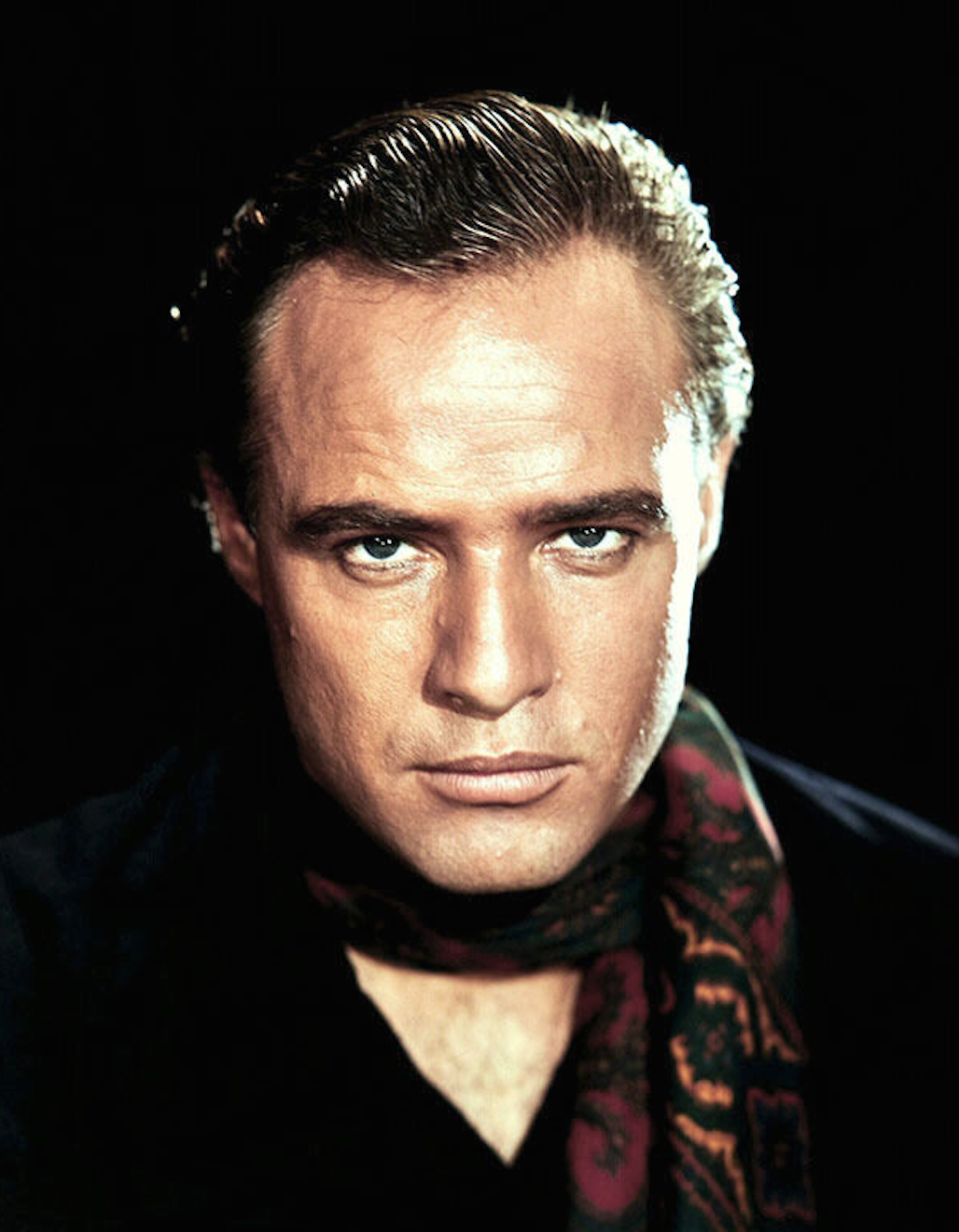


Sources & editorial notes
Reference databases
Sources for the entries on this page
- arkaevren.com arkaevren.com kaydı
- arkaevren.com arkaevren.com kaydı
- arkaevren.com arkaevren.com kaydı
- arkaevren.com arkaevren.com kaydı
- Wikipedia The Godfather — Wikipedia
Information from external sources is independently selected, consolidated and edited by Arka Evren. Sources are listed for verification and further reading. Encyclopedia text is used under its licence (CC BY-SA). How we work